
AI GOVERNANCE
AI regulation & compliance
architecture
Regulatory applicability, AI-system classification, mandatory obligations, documentation, supervisory exposure and sanctions: one integrated architecture for translating the evolving legal framework into accountable, auditable and operationally effective enterprise governance.

AI regulation does not apply uniformly across every tool, model or use case. Obligations depend on the organisation’s role, the intended purpose of the system, the people affected, the degree of autonomy involved and the potential consequences of its use. Effective regulatory analysis determines whether the organisation acts as a provider, deployer, importer, distributor or user of an AI capability and identifies which legal, data-protection, sectoral and contractual requirements apply. The objective is to establish a defensible regulatory position before systems are deployed or materially changed.
Regulatory Applicability
Once applicability and classification are understood, regulatory requirements must be translated into operating responsibilities. These may include risk management, data governance, human oversight, technical documentation, transparency, accuracy, security, incident reporting, supplier assurance and post-deployment monitoring. Compliance cannot remain a legal interpretation detached from operations. Each mandate must be assigned to accountable owners, embedded within approval and change processes and supported by evidence demonstrating that the requirement is functioning in practice.
Obligations & Mandates
Enforcement & Sanctions
Regulatory exposure extends beyond financial penalties. Enforcement may involve investigations, corrective orders, restrictions on use, mandatory withdrawal, contractual disputes, customer claims, reputational damage and personal accountability for governance failures. Organisations therefore need early visibility of non-compliance, material exceptions and emerging regulatory change. Effective oversight allows leadership to intervene before deficiencies become reportable incidents or enforcement matters and ensures that regulatory risk is treated as a management responsibility rather than a technical afterthought.
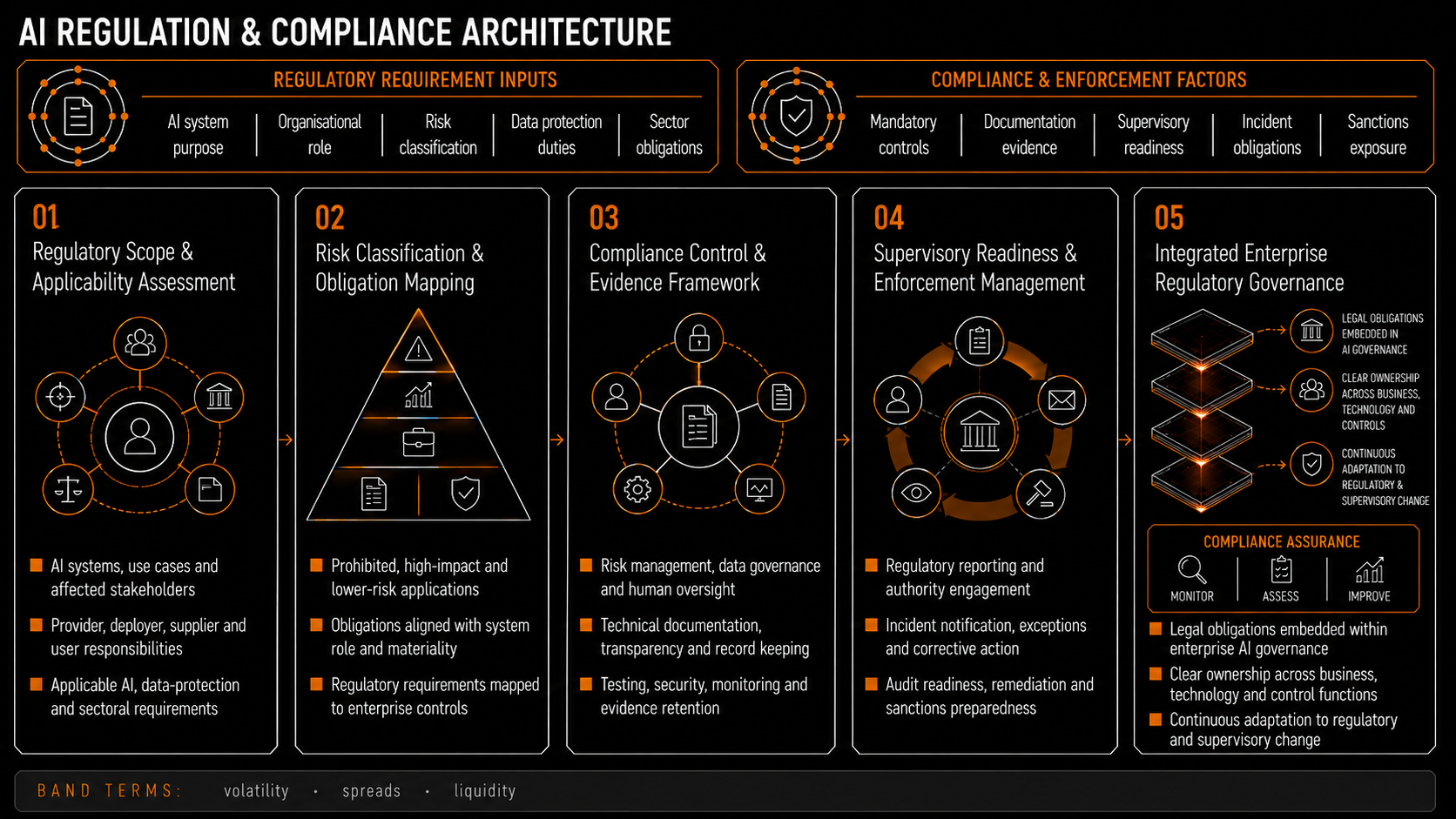
Governance is no longer optional because enterprise AI now operates within an expanding framework of statutory duties, regulatory expectations, data-protection requirements and internal accountability obligations. The relevant requirements depend on how an AI system is used, which role the organisation performs, what data is processed and what consequences may arise for customers, employees, operations or regulated activities. Effective regulatory architecture therefore connects applicability assessment, risk classification, obligation mapping, operational controls, documentation, human oversight, incident reporting, supervisory readiness and sanctions exposure within one coherent compliance structure. This enables leadership to demonstrate not merely that policies exist, but that regulatory mandates have been translated into accountable ownership, functioning controls and defensible evidence across the enterprise.
© 2026 Coastlight Global Risk
COASTLIGHT EXECUTIVE BRIEF
AI regulation & compliance architecture
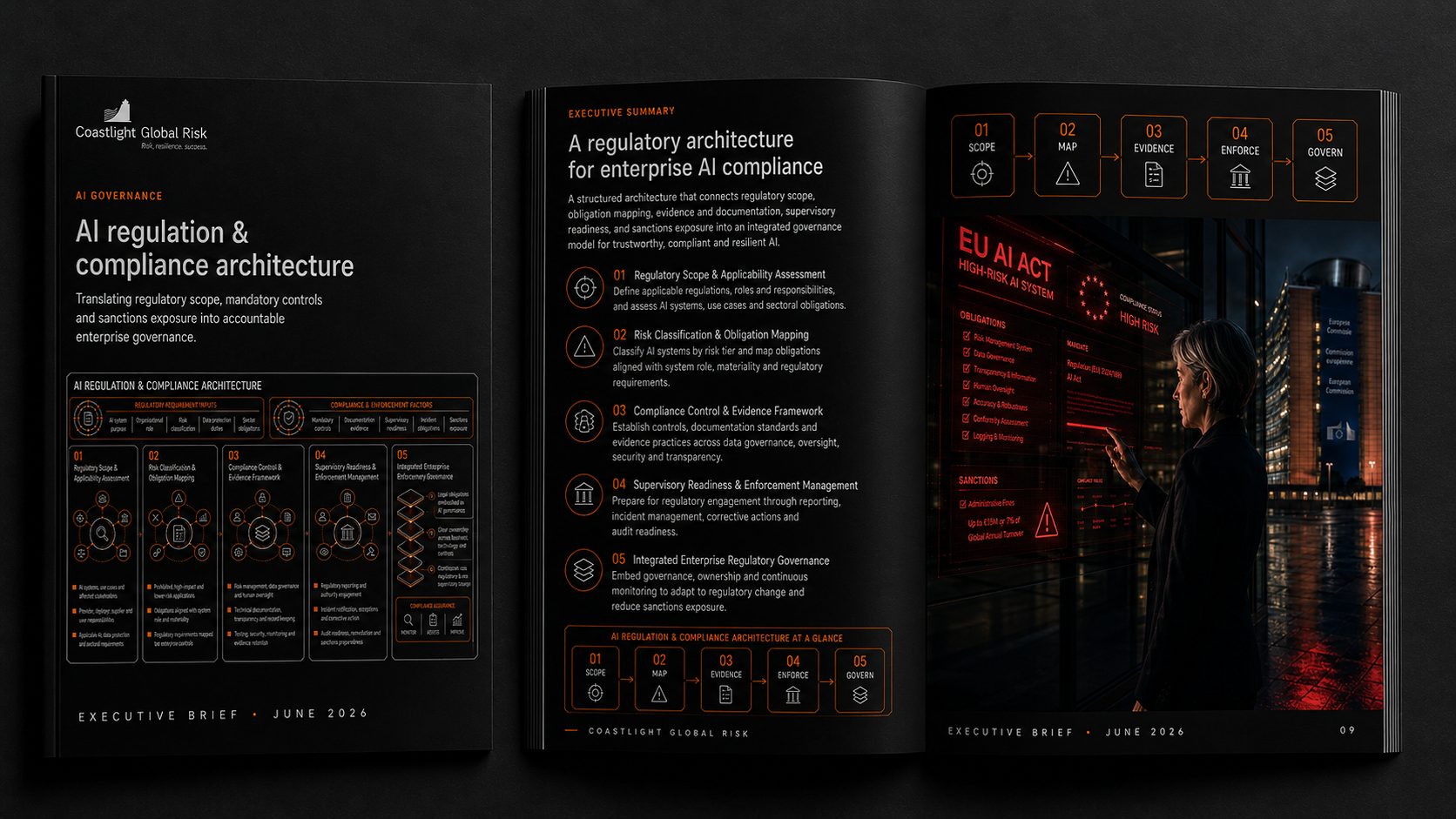
How regulatory applicability, AI-system classification, mandatory obligations, supervisory exposure and sanctions are translated into accountable controls and auditable enterprise governance.
regulatory scope, organisational roles and AI-system classification
mandatory controls, documentation and compliance evidence
supervisory readiness, incident obligations and sanctions exposure