
AI GOVERNANCE
AI use & control
architecture

Sensitive data, unverified outputs, hallucination, decision reliance, regulatory exposure and liability: one integrated architecture for controlling how AI is used, how outputs are validated and how accountability is maintained across the enterprise.
AI tools create new pathways through which confidential, personal, proprietary or regulated information may leave the organisation’s controlled environment. Employees may enter sensitive content into public models, applications may transmit data to external providers and embedded AI capabilities may process information under unclear retention, training or jurisdictional arrangements. Effective control requires visibility into prompts, uploads, integrations, model access and supplier practices so that data use remains proportionate, authorised and protected.
Confidentiality & Leakage
Reliability & Hallucination
Generated content may appear authoritative while remaining incomplete, inaccurate, fabricated or unsuitable for the context in which it is used. The risk increases when AI outputs influence customers, employees, contracts, regulatory submissions, safety processes, financial analysis or management decisions without appropriate validation. Effective governance defines where human review is mandatory, what evidence must support an output and when uncertainty, inconsistency or insufficient traceability requires escalation.
Liability & Accountability
AI does not remove responsibility from the organisation or the individuals relying upon its outputs. Liability may arise through data misuse, discrimination, intellectual-property infringement, misleading communication, contractual failure, regulatory breach or harmful operational decisions. Clear ownership must therefore be established for approving AI use, validating results, challenging recommendations, documenting material decisions and responding when AI-supported activity creates loss or harm.
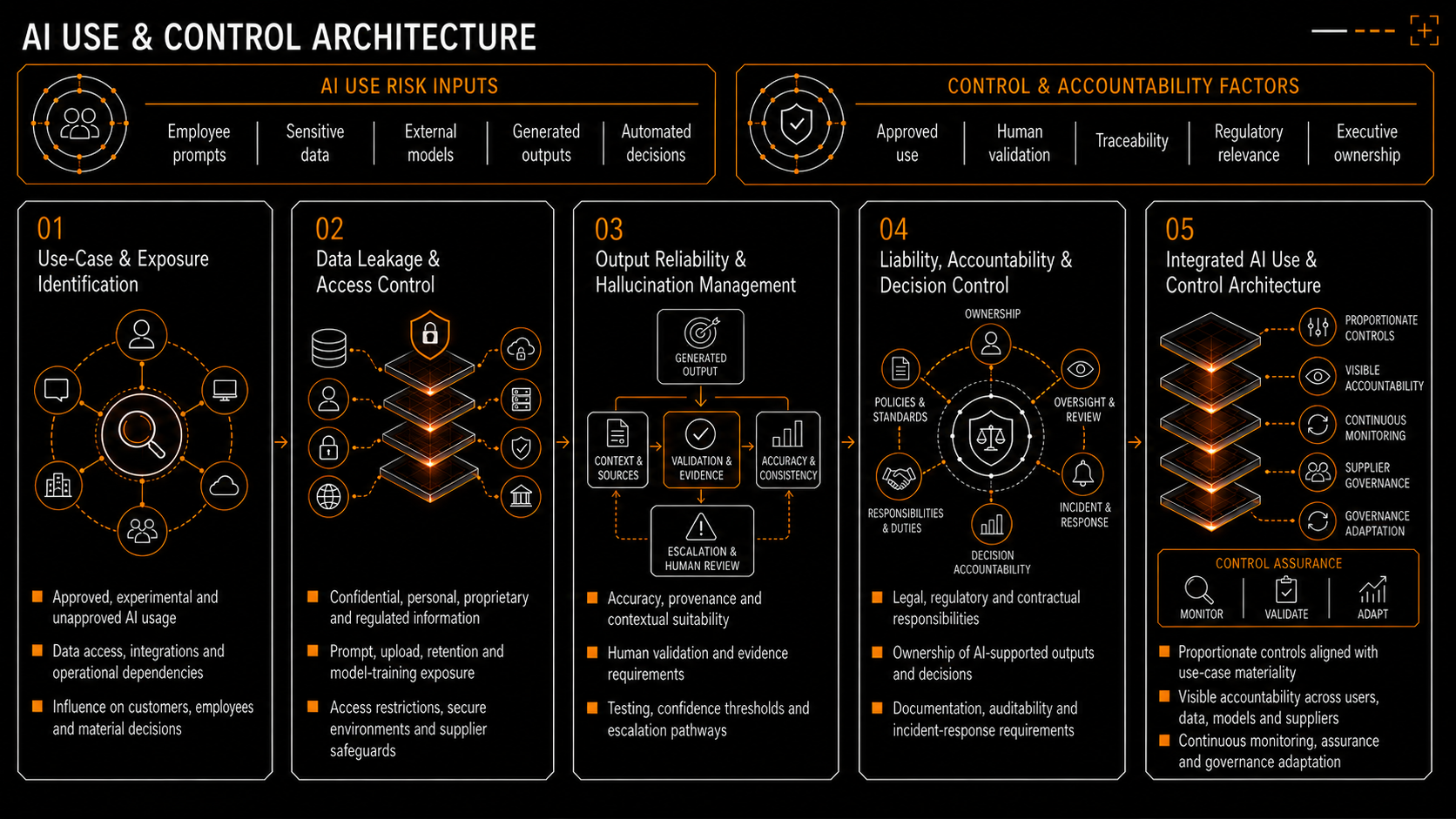
The principal risk of enterprise AI is not the existence of the technology, but its uncontrolled use. Sensitive information may enter external systems, generated content may be accepted without verification and automated recommendations may influence material decisions without clear accountability. These exposures often develop gradually through employee behaviour, embedded software capabilities, supplier platforms and operational integrations rather than through one formally approved AI deployment. Effective AI-use architecture therefore connects use-case visibility, data protection, access control, output validation, human oversight, traceability, supplier governance, regulatory relevance and decision ownership within one coherent control structure. This allows the organisation to benefit from AI while preventing leakage, hallucination and unclear liability from becoming material operational, legal or reputational consequences.
© 2026 Coastlight Global Risk
COASTLIGHT EXECUTIVE BRIEF
AI use & control architecture

How data leakage, unreliable outputs, hallucination risk, decision reliance and liability are governed through proportionate controls, human validation and clear accountability.
sensitive data, access control and leakage prevention
output reliability, hallucination management and human validation
liability, decision ownership and continuous governance oversight