
INDUSTRY RISK
Aviation logistics
risk architecture
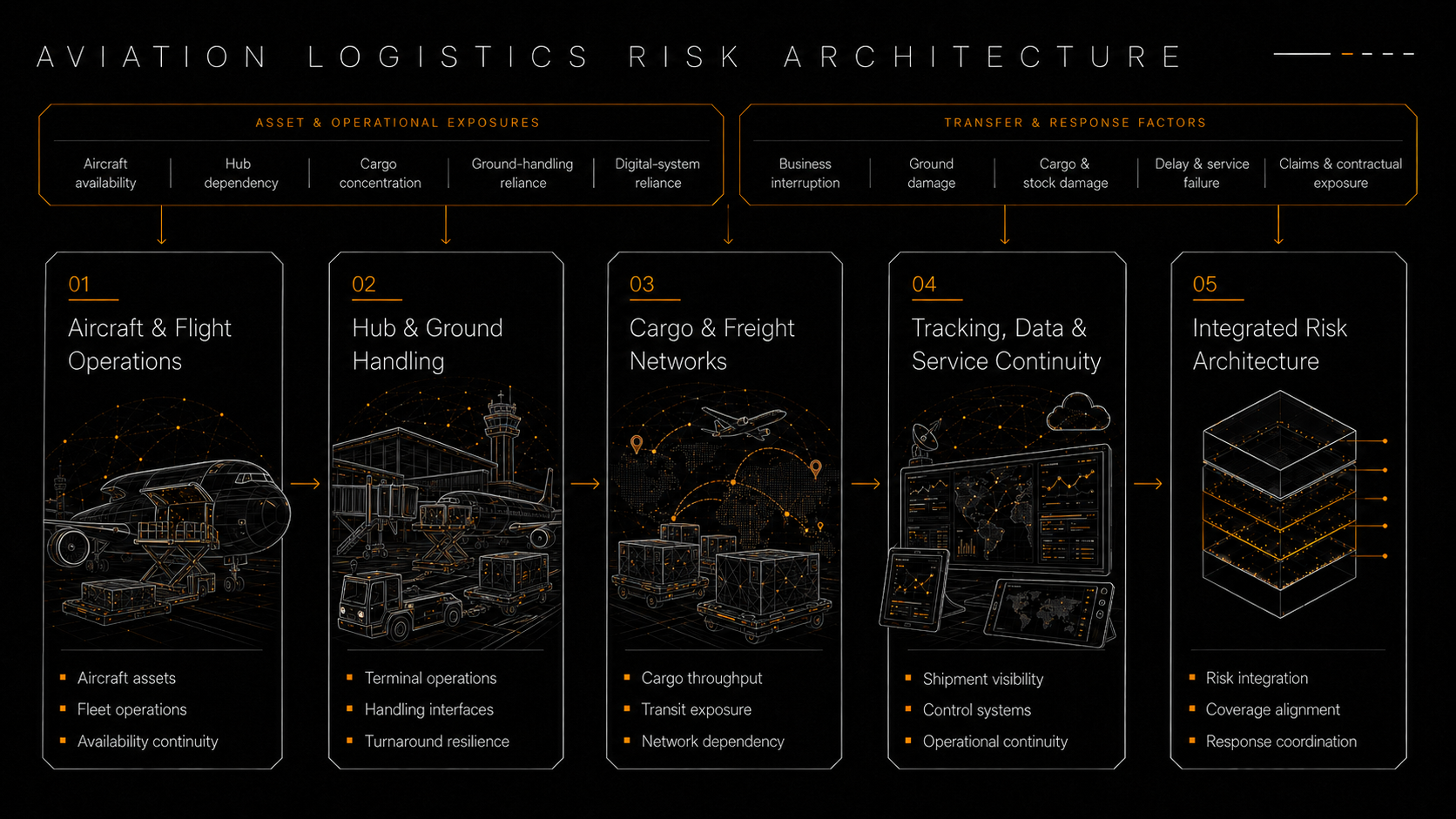
Aircraft, airport hubs, ground handling, air cargo flows and time-critical dependencies: one connected aviation logistics risk system.

Aviation logistics risk is not confined to a single aircraft, airport or cargo shipment. Airlines, airport operators, ground handlers, cargo terminals, freight forwarders, integrators, customs authorities, fuel providers, maintenance organisations and digital platforms form an interdependent operating system in which disruption can propagate across schedules, cargo flows, contractual obligations and customer delivery.
Interdependence
A sound risk architecture begins by mapping fleet concentration, hub dependency, turnaround processes, ground-handling interfaces, cargo accumulation, specialist freight requirements, fuel availability, digital-system reliance, weather exposure, maintenance capacity and alternative routing options. This reveals where one local failure can interrupt multiple flights, strand high-value cargo and create wider operational and financial losses.
Exposure
Transfer
Effective risk transfer aligns aviation hull, aviation liability, airport and ground-handling liability, cargo and stock-throughput, property damage, business interruption, contingent interruption, cyber and political-violence cover with the actual aviation logistics model. The objective is to protect aircraft, cargo and operating continuity while maintaining recoverability under severe fleet, hub, handling and network-disruption scenarios.
© 2026 Coastlight Global Risk
Aviation logistics risk accumulates across aircraft operations, airport hubs, ground-handling processes, cargo terminals, digital systems and time-critical transport networks. An aircraft incident, hub closure, handling failure, systems outage or cargo disruption can rapidly develop into flight interruption, shipment delay, cargo damage, contractual exposure and complex multi-party claims. Effective protection therefore depends on understanding how these interfaces connect and aligning programme structure, limits, specialist cover, alternative capacity and response mechanisms across the full aviation logistics chain.
COASTLIGHT EXECUTIVE BRIEF
Aviation logistics risk architecture
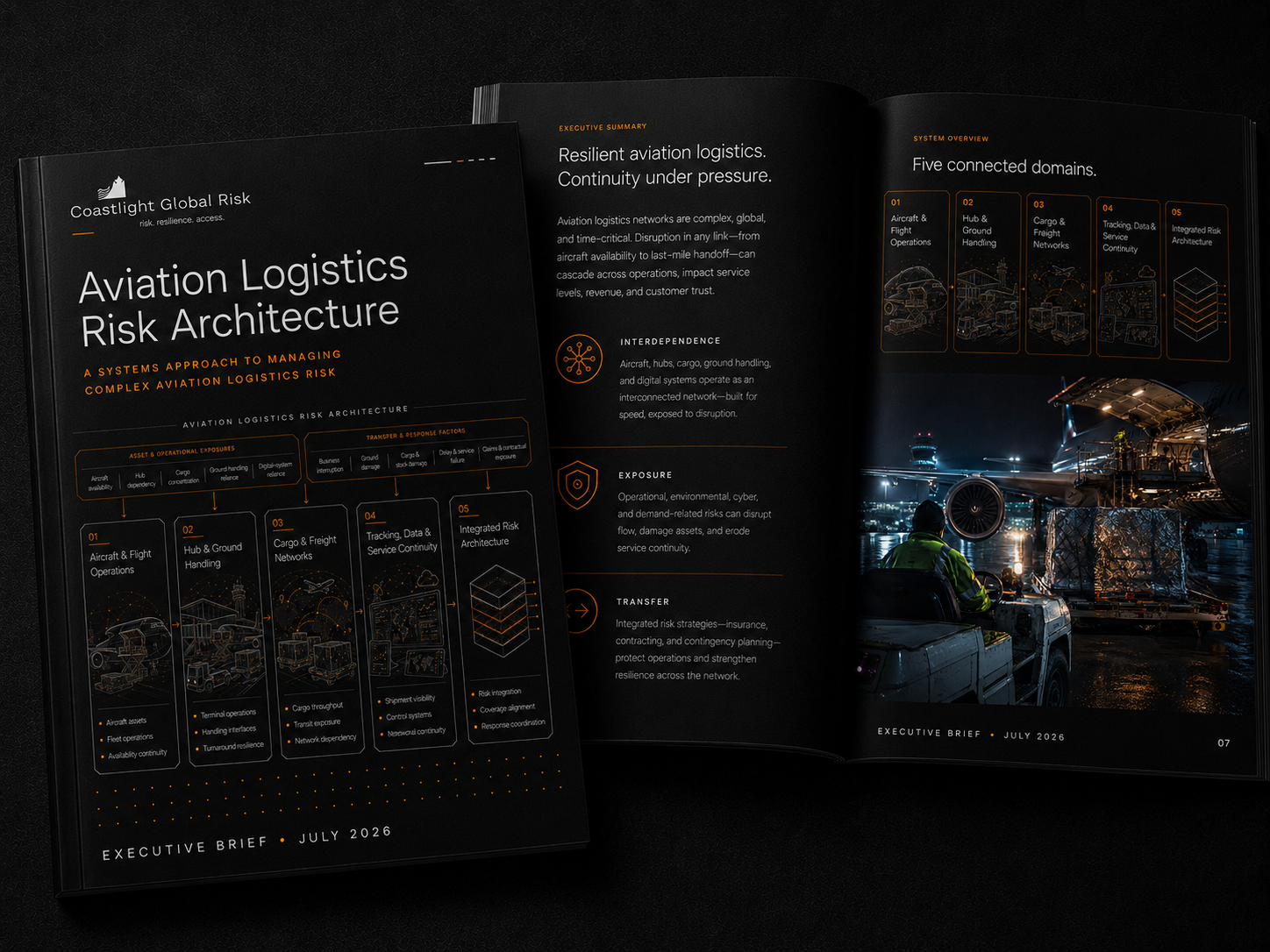
How aircraft operations, airport hubs, ground handling, air cargo flows and digital networks shape aviation logistics risk.
fleet, hub and ground-handling exposure
time-critical cargo and network dependencies
transfer, continuity and recovery architecture