
INDUSTRY RISK
Critical power infrastructure
risk architecture
Generation assets, transmission networks, substations and control systems: one connected power infrastructure risk system.
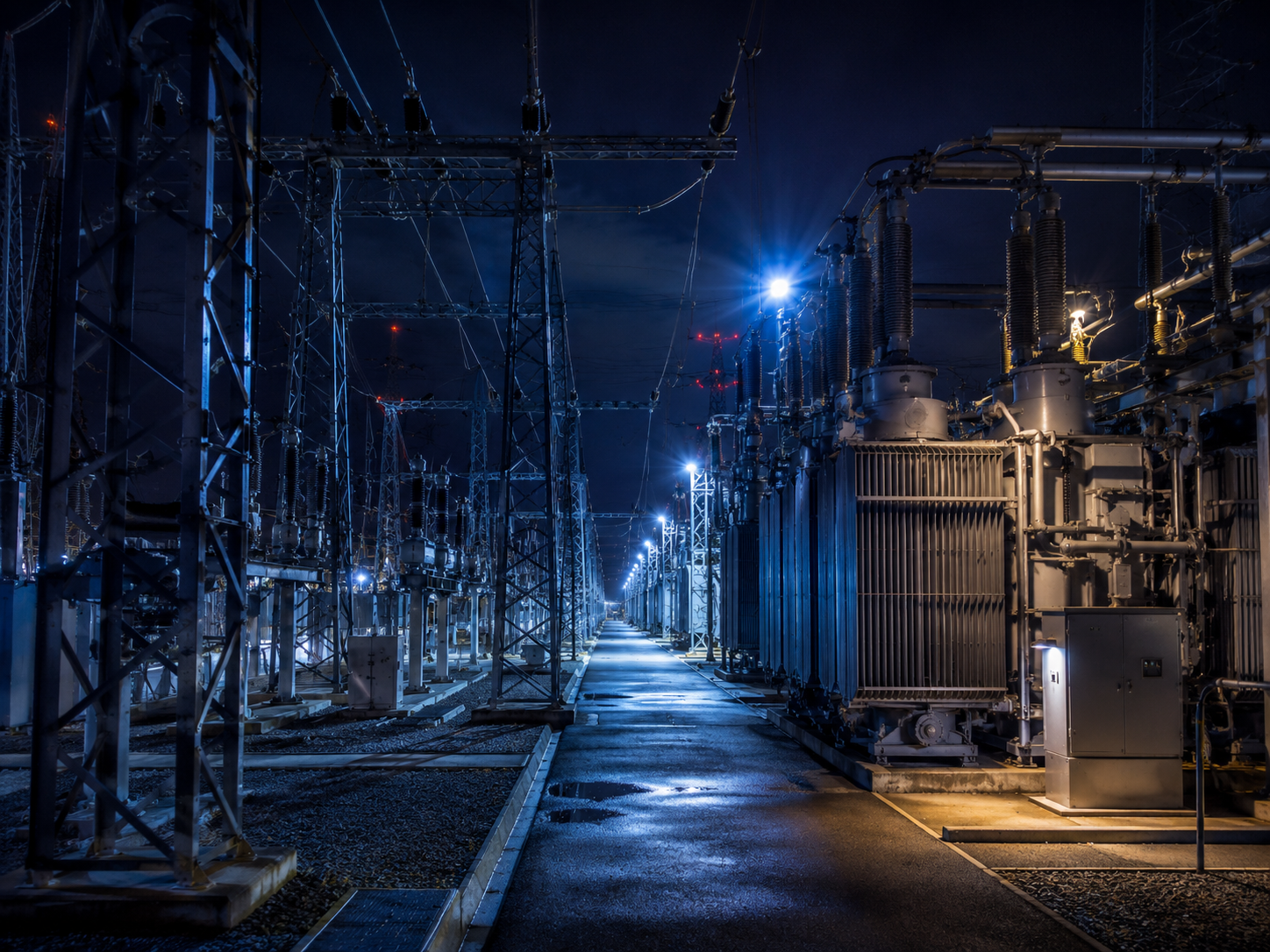
Power infrastructure risk is not confined to a single generating facility, transmission line or substation. Generation assets, high-voltage networks, transformers, substations, control centres, telecommunications, fuel supplies and specialist contractors operate as an interdependent system in which disruption can propagate across regions, operators and essential public services.
Interdependence
Transfer
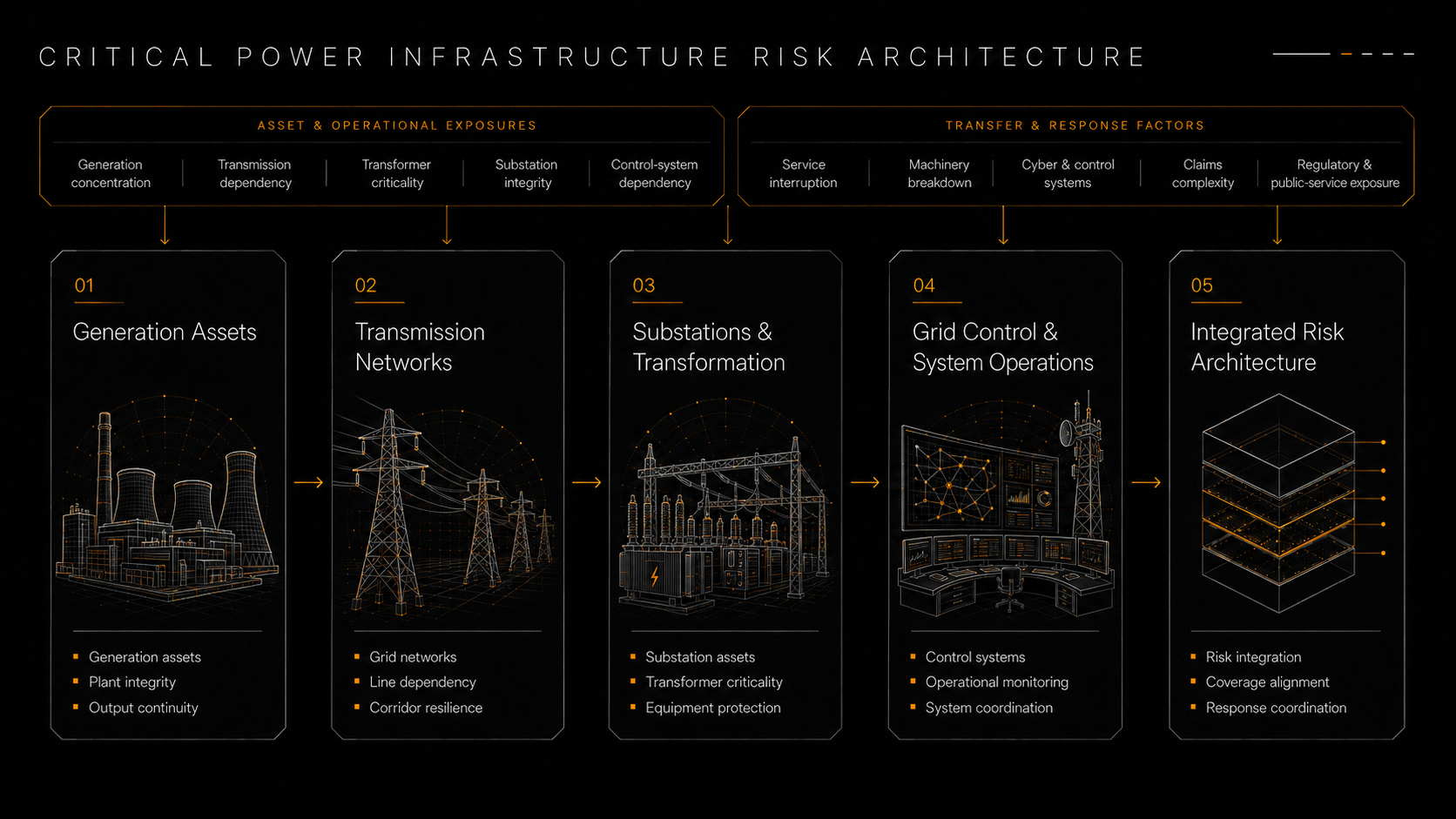
A sound risk architecture begins by mapping generation concentration, transmission dependencies, transformer criticality, substation integrity, protection systems, grid-control reliance, cyber exposure, restoration capacity, specialist equipment and repair lead times. This reveals where a local failure can escalate into cascading interruption, prolonged outage and complex multi-party loss.
Exposure
Effective risk transfer aligns property damage, machinery breakdown, business interruption, contingent interruption, cyber, terrorism, environmental liability and third-party cover with the actual power-system operating model. The objective is to protect continuity, preserve capital and maintain recoverability under severe equipment, network and systemic outage scenarios.
© 2026 Coastlight Global Risk
Power infrastructure risk accumulates across generation assets, transmission corridors, substations, transformers, protection systems and grid-control environments. A failure at one critical node can rapidly develop into cascading interruption, equipment damage, public-service disruption, regulatory intervention and complex multi-policy claims. Effective protection therefore depends on understanding how these systems interact and aligning programme structure, limits, specialist cover, restoration resources and response mechanisms across the full power-system chain.
Critical power infrastructure risk architecture
COASTLIGHT EXECUTIVE BRIEF
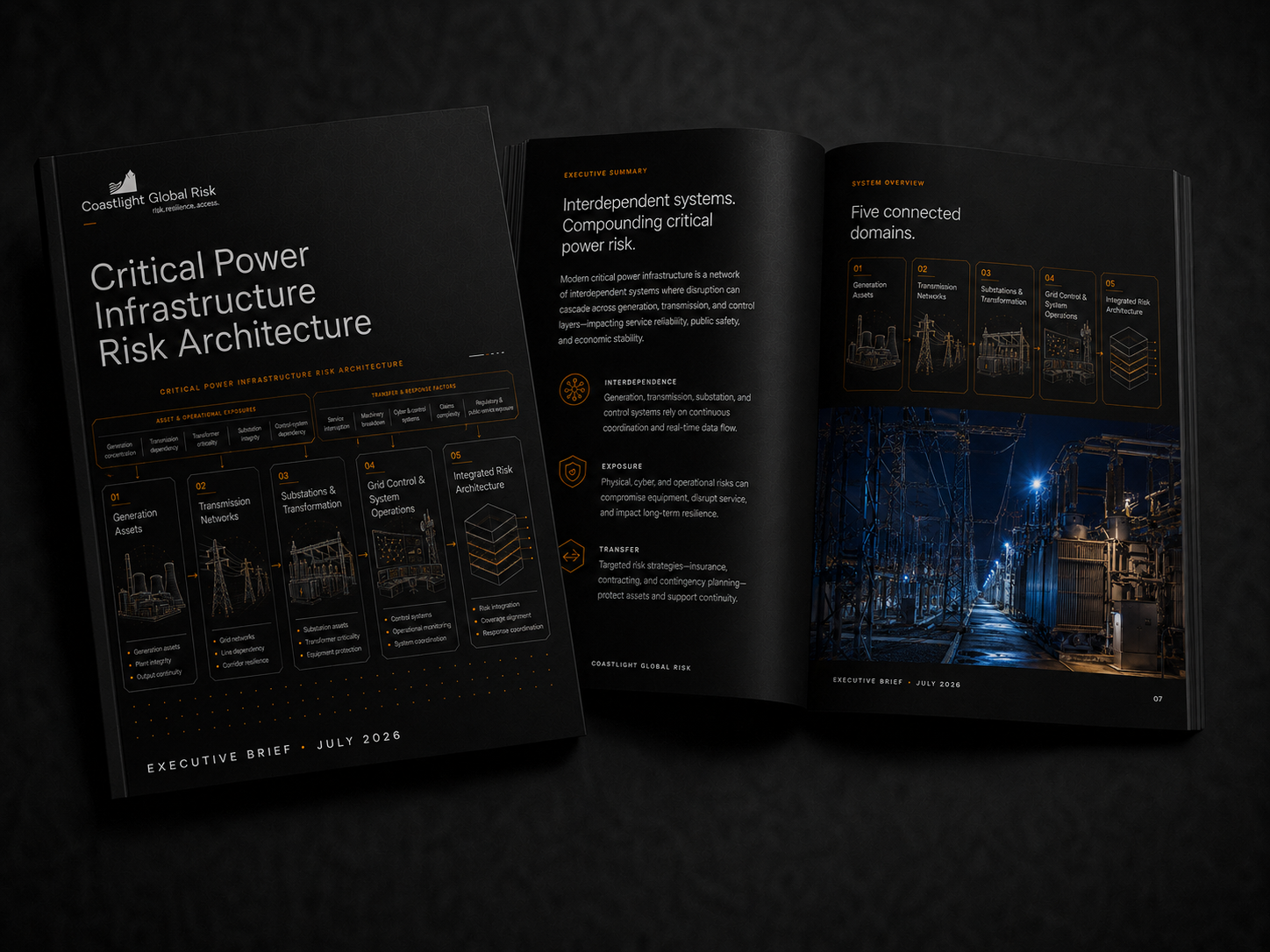
How generation assets, transmission networks, substations and control systems shape critical power infrastructure risk.
asset concentration and network dependency
cascading interruption and loss propagation
transfer, restoration and response architecture