
INDUSTRY RISK
Energy infrastructure risk architecture
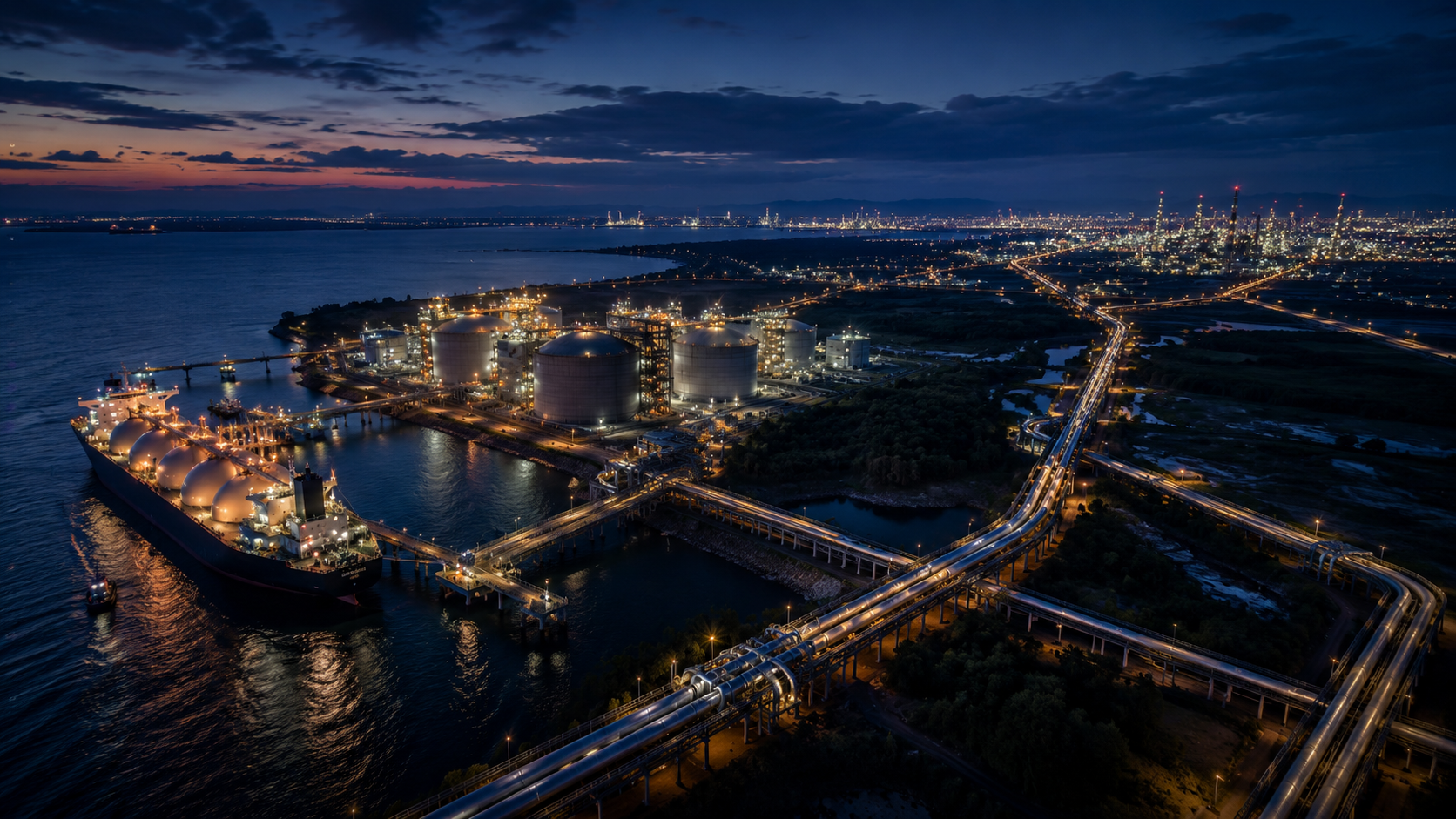
Tankers, terminals, and transit: one connected risk system.
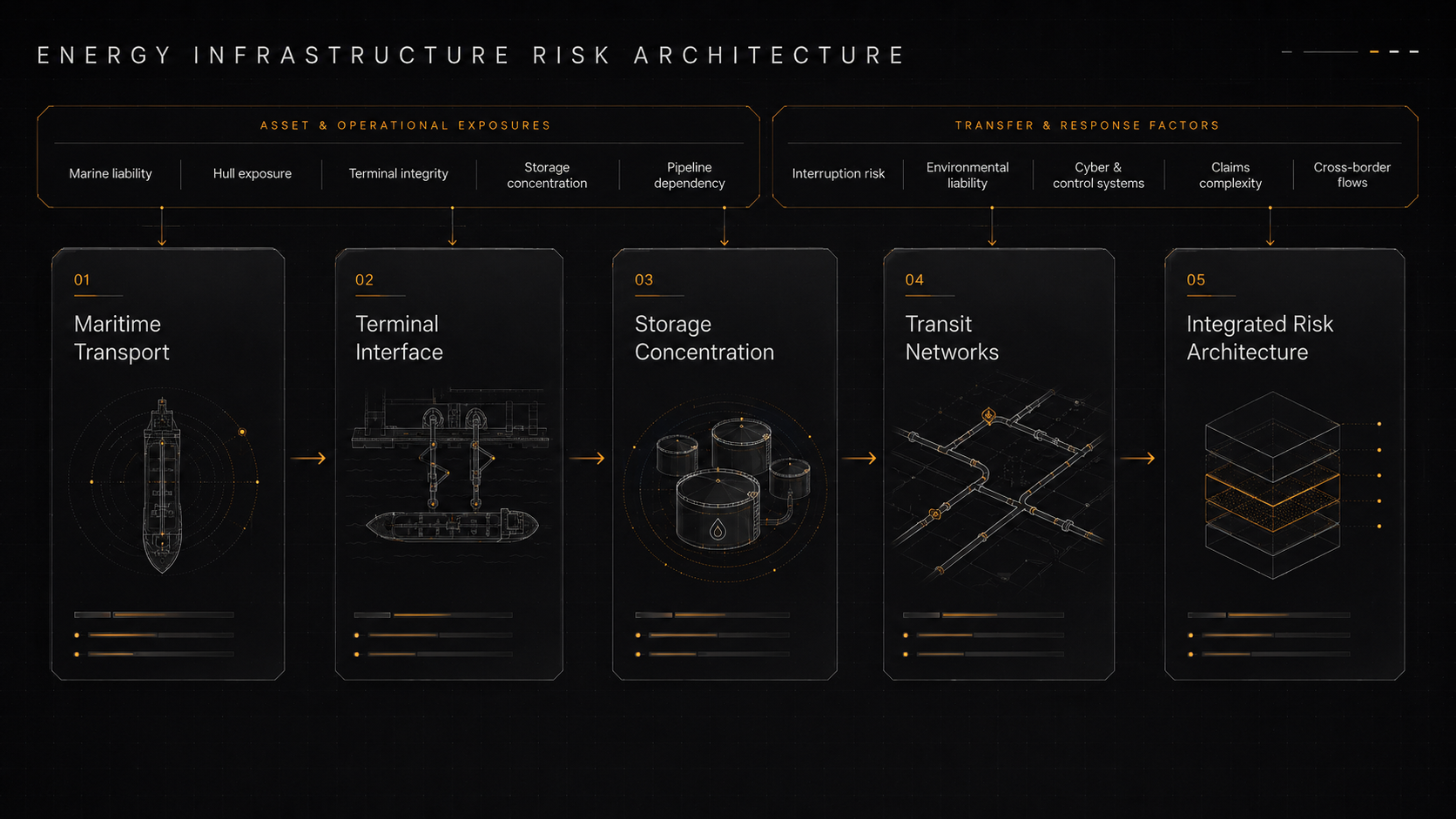
Energy infrastructure risk is not confined to isolated asset types. Tankers, terminals, and transit networks operate as an interdependent system in which physical damage, operational interruption, environmental liability, cyber disruption and geopolitical events can propagate across the value chain.
Interdependence
A sound risk architecture begins with mapping concentrations, dependencies, contractual obligations and credible loss scenarios across marine transport, fixed infrastructure, storage and transmission. This reveals where exposures accumulate, where coverage may fragment and where a single event may trigger losses across several insurance lines.
Exposure
Transfer
Effective risk transfer aligns limits, deductibles, wordings, market capacity and claims response with the actual operating model. The objective is to protect continuity, preserve capital and maintain recoverability at scale.
© 2026 Coastlight Global Risk
Maritime transport, terminal interfaces, storage concentrations, and transit networks form a connected operating system in which operational dependencies, interruption potential, environmental liability, and control-system exposure converge. Effective risk transfer depends on understanding these connections, identifying potential loss propagation, and aligning programme structure, limits, and response mechanisms across the full operating chain.
COASTLIGHT EXECUTIVE BRIEF
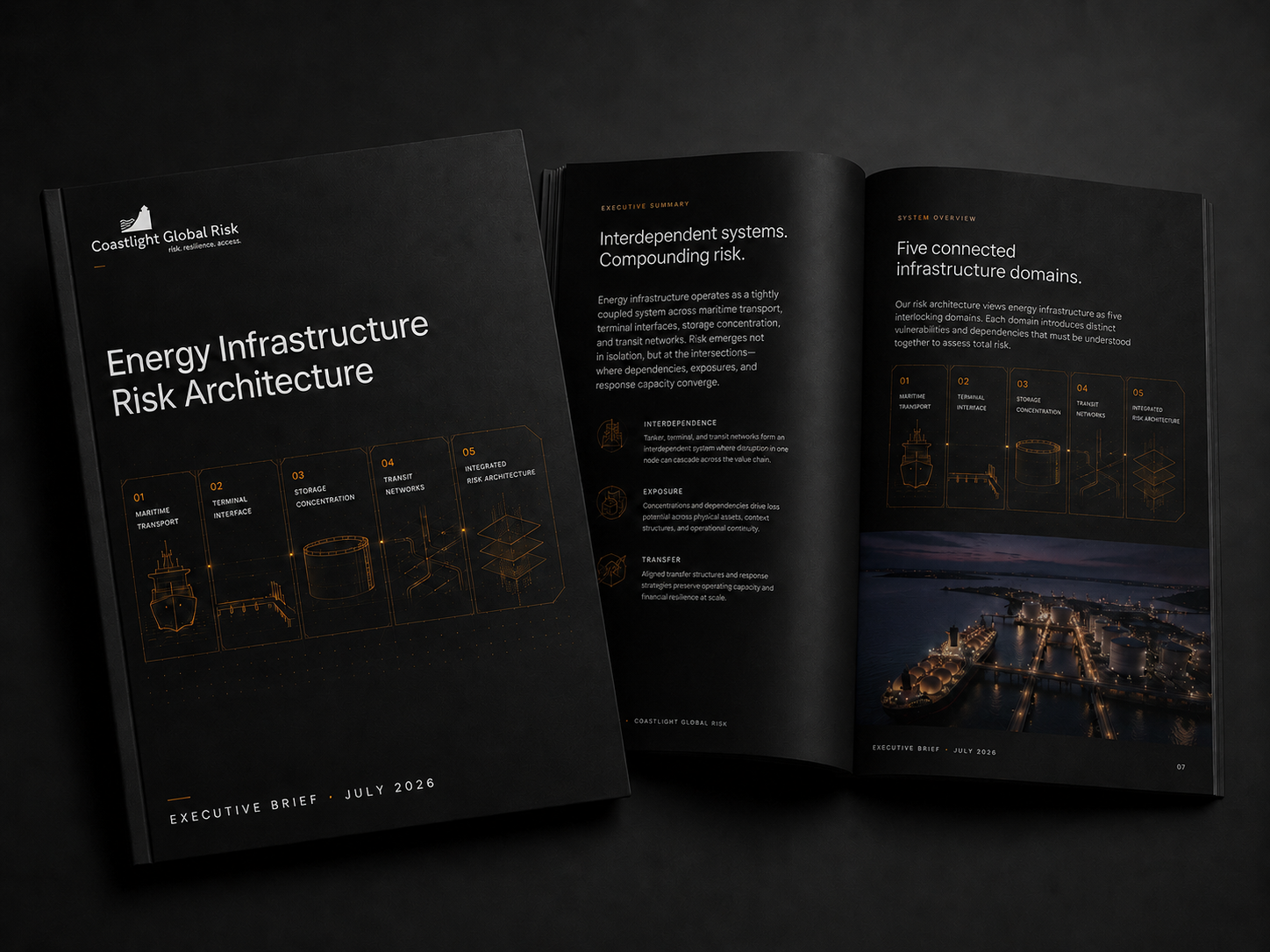
Energy infrastructure risk architecture
How maritime transport, terminal interfaces, storage concentration, and transit networks shape risk.
exposure accumulation
operational dependencies
transfer and response structures