
MACRO INTELLIGENCE
Global disruption & operational exposure
Tariffs, trade restrictions, shipping constraints, strategic chokepoints, supplier concentration and geopolitical friction: one integrated framework for understanding how global disruption moves through supply chains and becomes material operational, financial and risk-transfer exposure across the enterprise.
Global disruption often begins with political decisions rather than physical interruption. Tariffs, sanctions, export controls, customs restrictions, industrial policy and shifting trade alliances can alter market access, supplier economics and investment conditions with limited warning. Even where an organisation is not directly targeted, measures affecting key countries, technologies, commodities or counterparties may change costs and availability throughout the value chain. Effective macro intelligence therefore identifies where political and regulatory developments could alter the commercial conditions on which operations depend.
Trade Policy & Geopolitical Friction
Shipping & Supply-Chain Transmission
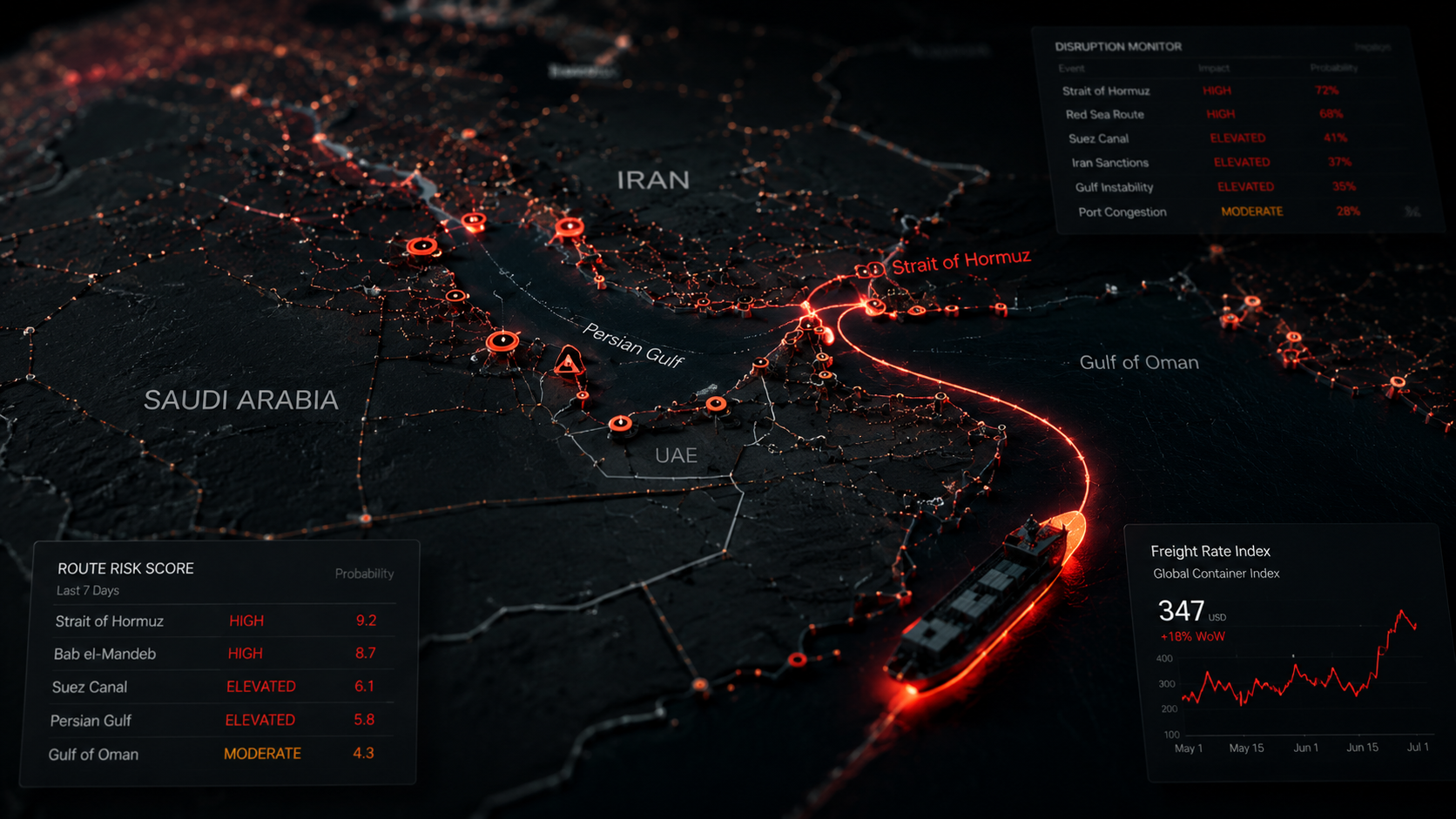
Trade disruption becomes operational when goods, components, energy or raw materials can no longer move reliably through established routes. Port closures, maritime conflict, canal restrictions, vessel diversions, freight-capacity shortages and border delays may extend lead times while increasing logistics, inventory and working-capital costs. The impact is rarely limited to the delayed shipment itself. Disruption may cascade through production schedules, customer commitments, supplier relationships and distribution networks, particularly where alternative routes or sources cannot be activated quickly.
Enterprise Exposure & Resilience
The severity of disruption depends on how global dependencies are embedded within the enterprise. Single-source suppliers, concentrated production locations, specialised components, limited inventory buffers and tightly optimised logistics may create hidden points of fragility. Effective analysis connects geopolitical developments with specific products, facilities, suppliers, routes and revenue streams to determine where interruption would become material. This allows leadership to distinguish manageable volatility from exposures requiring diversification, contingency planning, additional liquidity or external risk transfer.
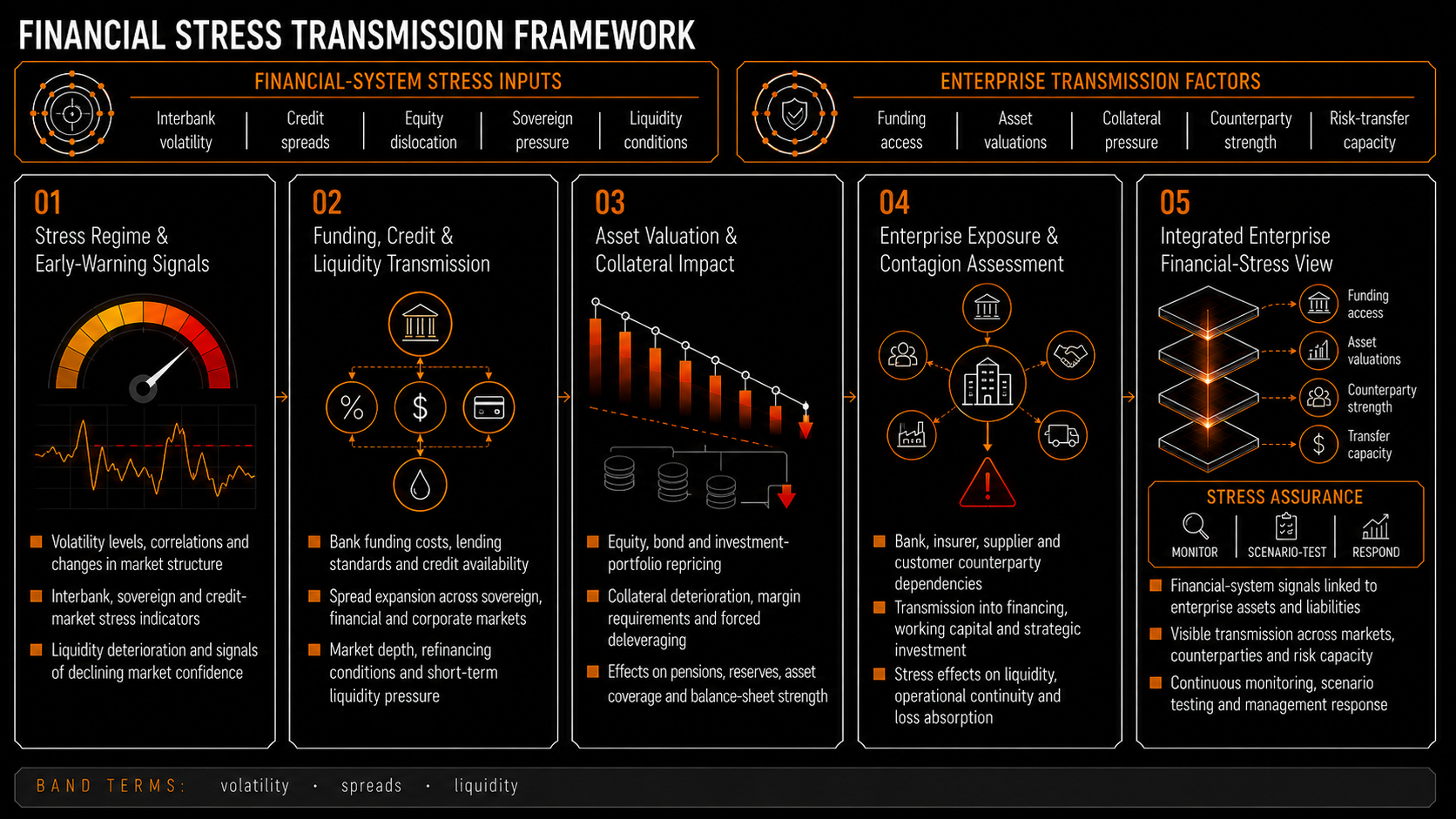
Global disruption becomes operational exposure when geopolitical tension, trade restrictions and transportation constraints move through the specific supply chains on which an organisation depends. A tariff, sanction, maritime closure or regional conflict may initially appear remote from day-to-day operations, yet rapidly affect input availability, freight costs, production schedules, customer commitments and working-capital requirements. Concentrated suppliers, specialised components and limited alternative routes can amplify the impact and convert a global event into a local operational interruption. Effective macro analysis therefore connects geopolitical signals, trade policy, shipping routes, supplier dependencies, inventory resilience, financial pressure and operational consequences within one coherent disruption framework. This enables leadership to identify where global instability could reach the enterprise, strengthen contingency options and act before external disruption becomes a material business constraint.
© 2026 Coastlight Global Risk
COASTLIGHT EXECUTIVE BRIEF
Global disruption & operational exposure
geopolitical developments, tariffs and trade restrictions
shipping chokepoints, supplier concentration and dependency risk
operational continuity, financial impact and enterprise resilience
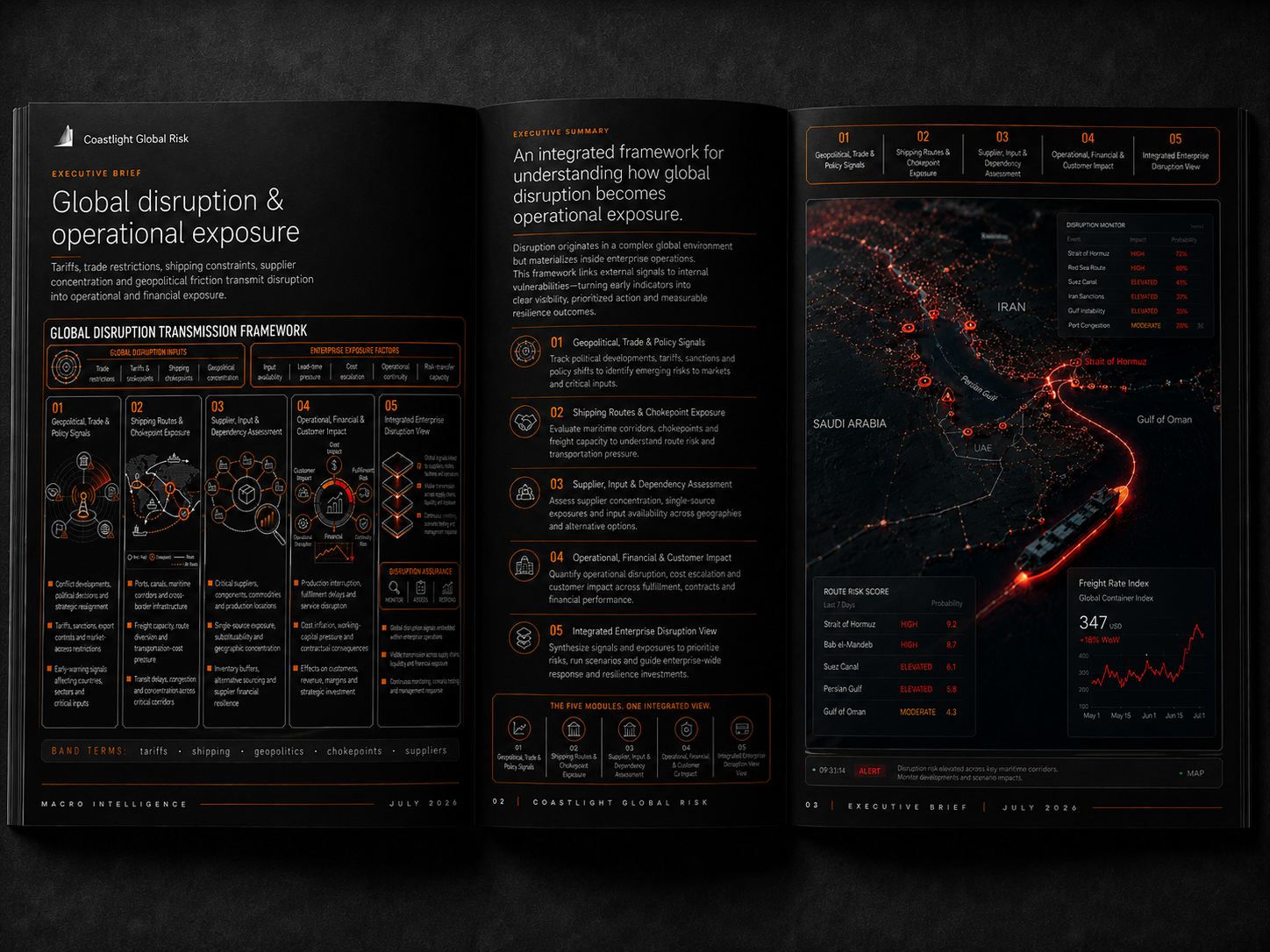
How tariffs, geopolitical friction, shipping constraints and supplier concentration transmit global disruption into operational, financial and risk-transfer exposure.