
INDUSTRY RISK
Global trade
risk architecture
Freighters, ports, cargo flows, inland logistics and trade dependencies: one connected global trade risk system.
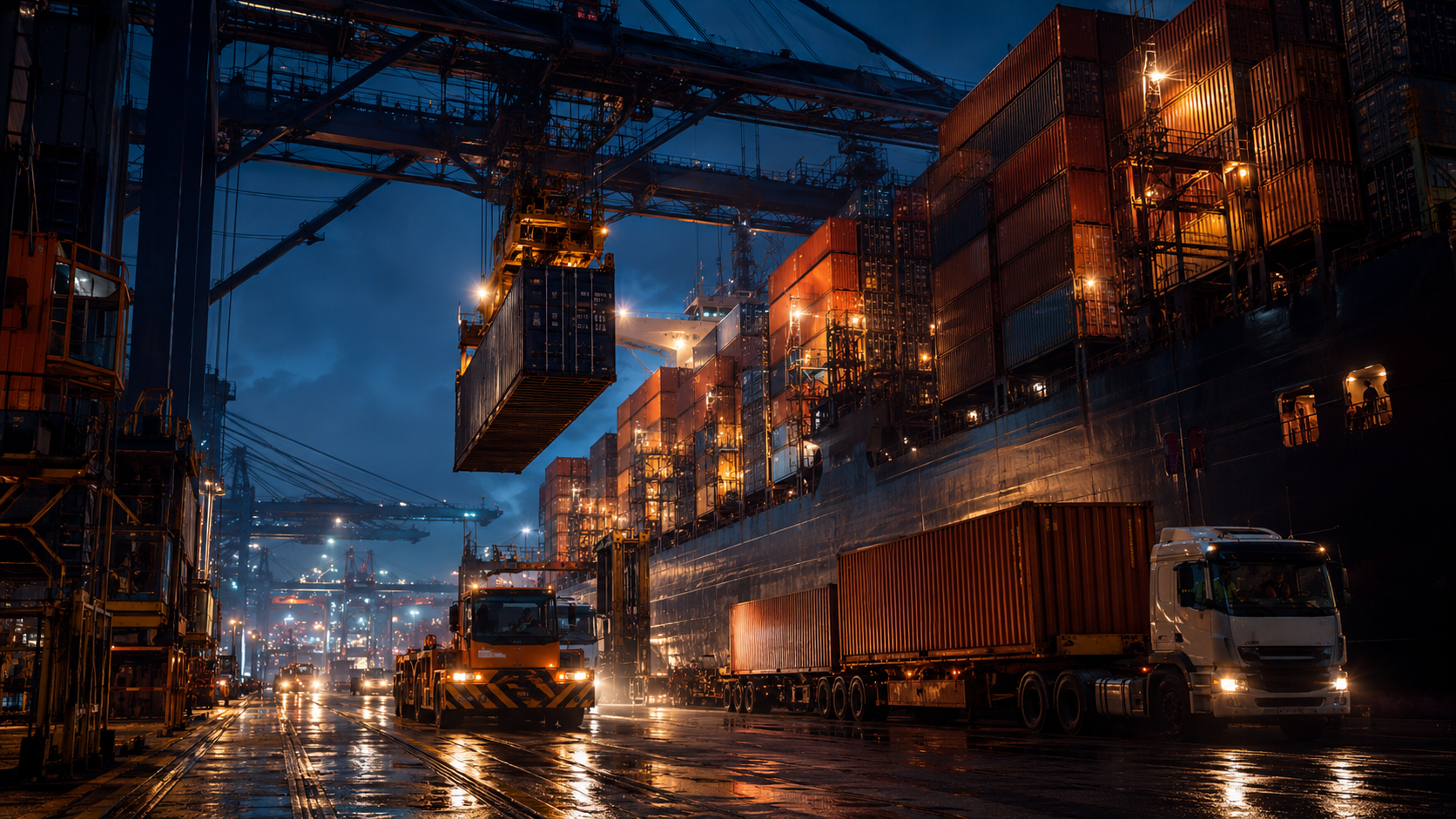
Global trade risk is not confined to a single vessel, port or shipment. Freighters, terminals, cargo owners, logistics providers, inland transport networks, customs authorities, digital platforms and commercial counterparties operate as an interdependent system in which disruption can propagate across physical flows, contractual obligations and multiple jurisdictions.
Interdependence
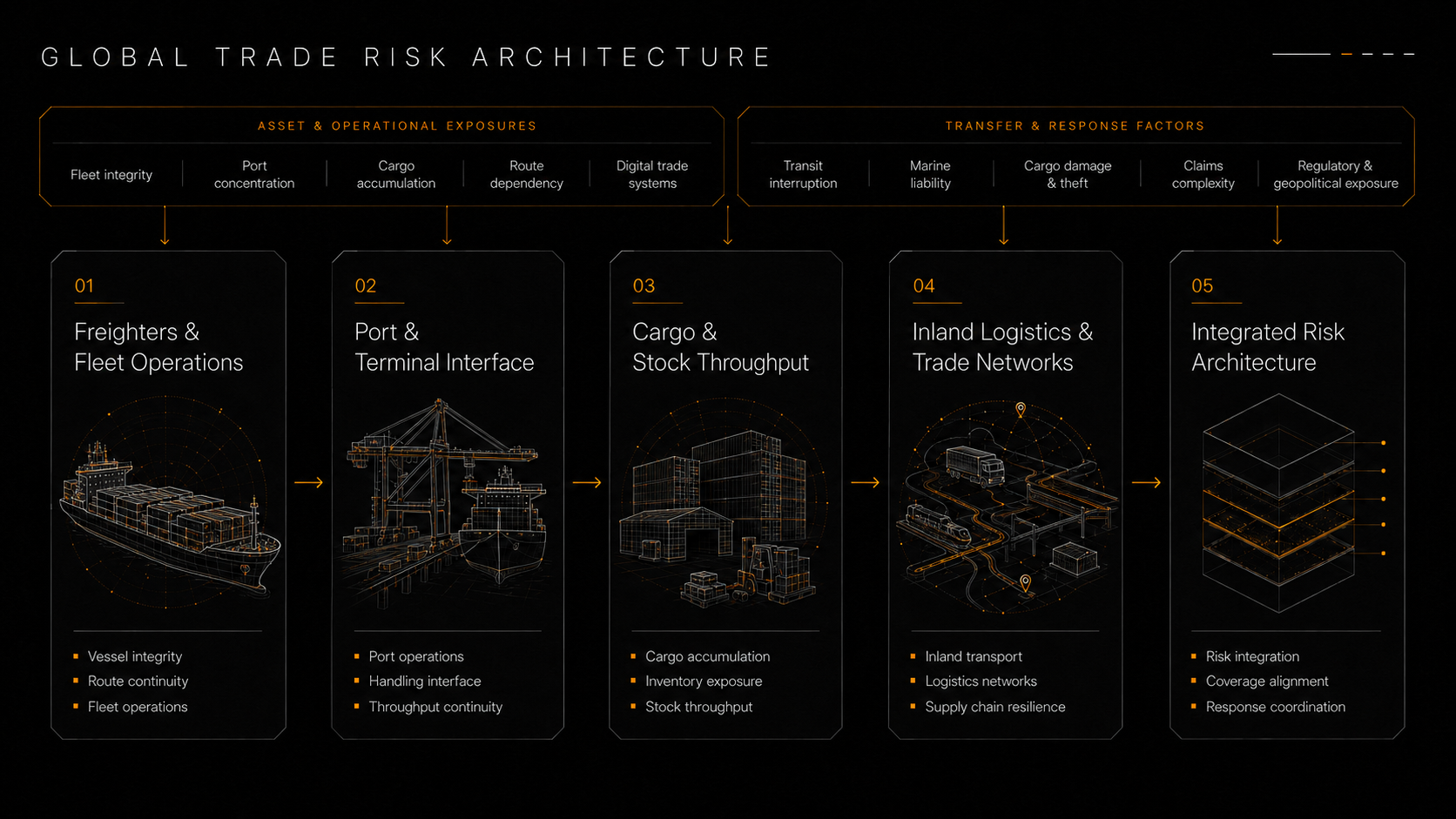
A sound risk architecture begins by mapping fleet and vessel dependencies, port concentration, cargo accumulation, handling interfaces, route and chokepoint exposure, inland logistics, digital trade systems, customs processes and recovery alternatives. This reveals where delay can escalate, where inventory becomes concentrated and where one event may activate several policies and contractual liabilities.
Exposure
Effective risk transfer aligns hull and machinery, marine liability, cargo and stock throughput, port and terminal property, business interruption, cyber, political violence and trade disruption cover with the actual movement of goods. The objective is to protect continuity, preserve capital and maintain recoverability under severe transport, port and supply-chain loss scenarios.
Transfer
© 2026 Coastlight Global Risk
Global trade risk accumulates across vessel operations, port and terminal interfaces, cargo concentrations, inland logistics and digital trade systems. A disruption at one vessel, terminal, chokepoint or logistics node can rapidly develop into delay, detention, cargo damage, inventory shortage, contractual default and complex multi-party claims. Effective protection therefore depends on understanding how these interfaces connect and aligning programme structure, specialist cover, limits and response mechanisms across the full trade chain.
COASTLIGHT EXECUTIVE BRIEF
Global trade risk architecture
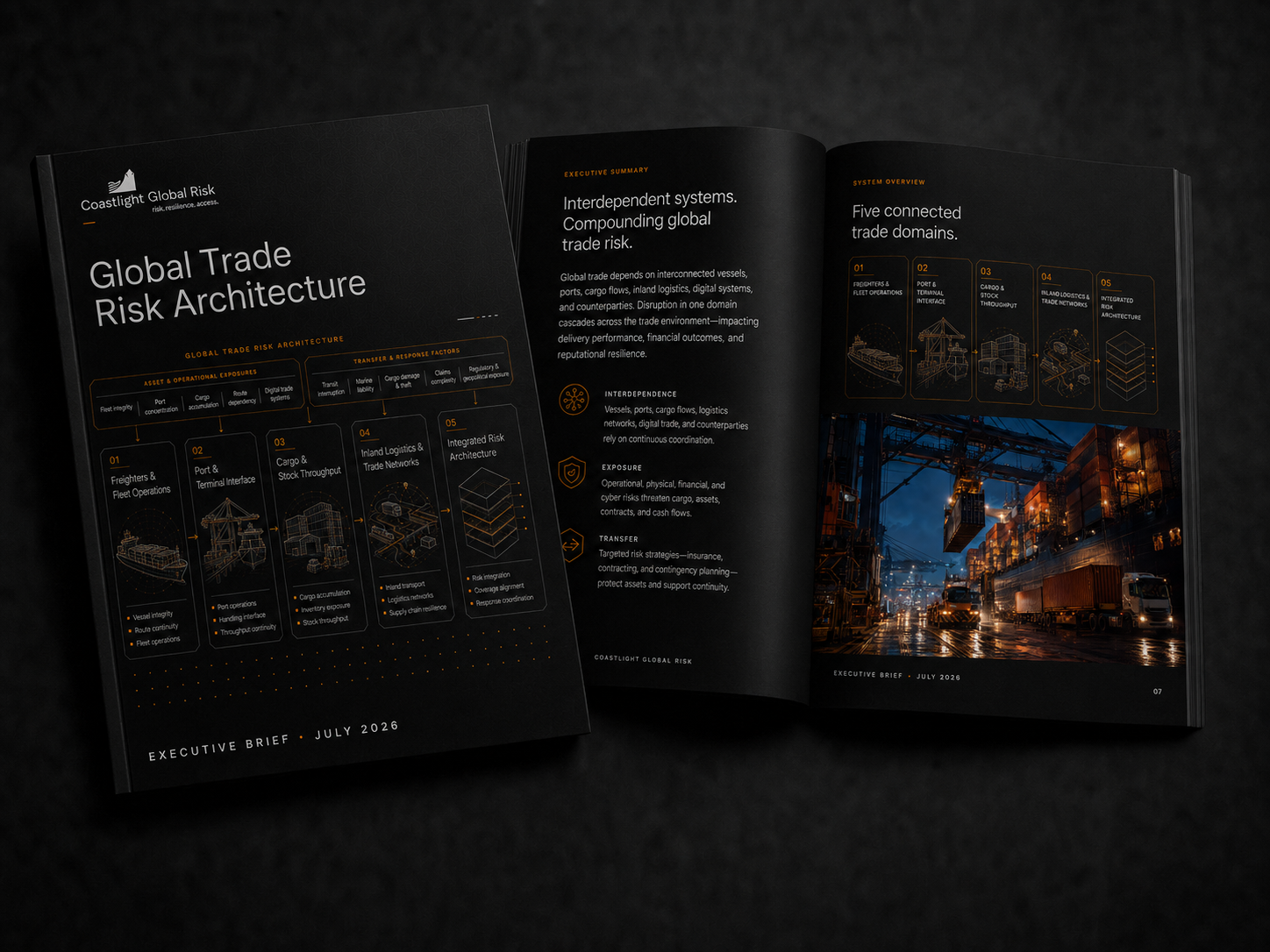
How freighters, ports, cargo concentrations and interconnected logistics networks shape global trade risk.
marine asset and terminal exposure
cargo accumulation and supply-chain propagation
transfer, response and recovery architecture