
CYBER RESILIENCE
Incident response
architecture

Incident signals, business impact, command authority, containment actions, stakeholder coordination and resolution priorities: one integrated architecture for making clear decisions under pressure while protecting critical operations.
Effective incident response begins by establishing what has happened, which systems and business services are affected and how rapidly the disruption may spread. Technical alerts, threat intelligence, operational reports, data-integrity concerns and third-party dependencies must be consolidated into one verified incident picture. The objective is to distinguish confirmed facts from assumptions, identify immediate business consequences and provide decision-makers with the clearest possible view of the developing situation.
Situational Awareness
Command & Control
A major cyber incident cannot be managed through fragmented technical activity. Decision authority, escalation paths, crisis leadership and communication responsibilities must be activated immediately. Leadership must understand who controls containment, who decides whether operations should be isolated or suspended, who engages regulators and insurers and which decisions require executive approval. Clear command prevents delay, duplication and conflicting actions at the moment when coordination matters most.
Containment & Resolution
Response must limit damage while preserving the organisation’s ability to continue essential operations and recover safely. Containment decisions may involve isolating systems, disabling access, separating networks, suspending services or activating manual workarounds. Resolution requires evidence preservation, eradication, system validation, controlled restoration and continuous reassessment of risk. The objective is not merely to remove the immediate threat, but to regain control without creating additional operational or legal consequences.
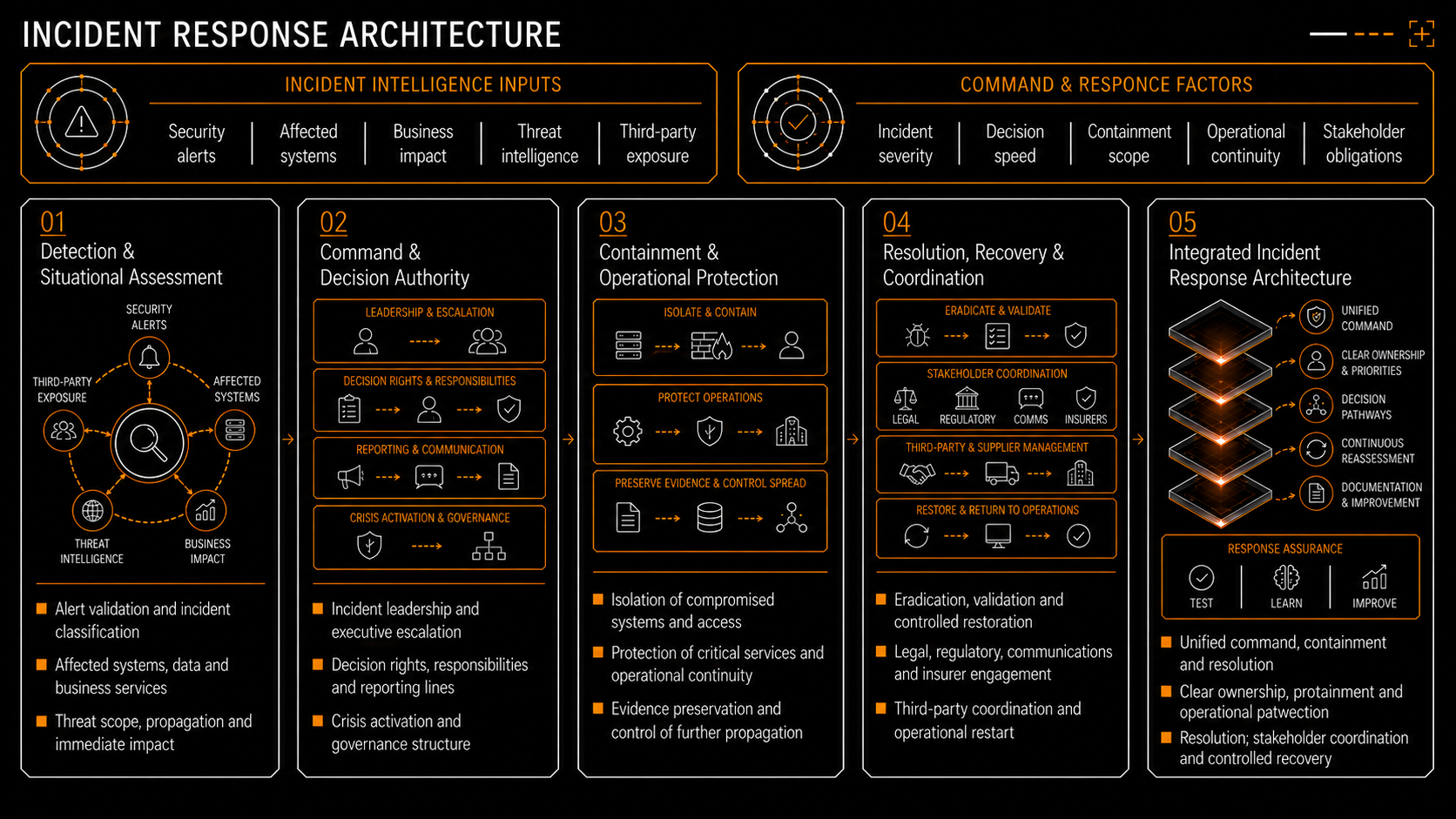
A major cyber incident develops faster than complete certainty can be achieved. Technical teams may be investigating compromised systems while operations are disrupted, customers require answers, regulators expect notification and leadership must decide whether critical services should be isolated, continued or restored. Effective incident response therefore depends on one coordinated architecture connecting situational awareness, severity assessment, command authority, containment, business continuity, legal obligations, communications, insurer engagement and controlled recovery. The objective is to establish control quickly, protect essential operations, limit further loss and move the organisation from disruption towards a verified and sustainable resolution.
© 2026 Coastlight Global Risk
COASTLIGHT EXECUTIVE BRIEF
Incident response architecture
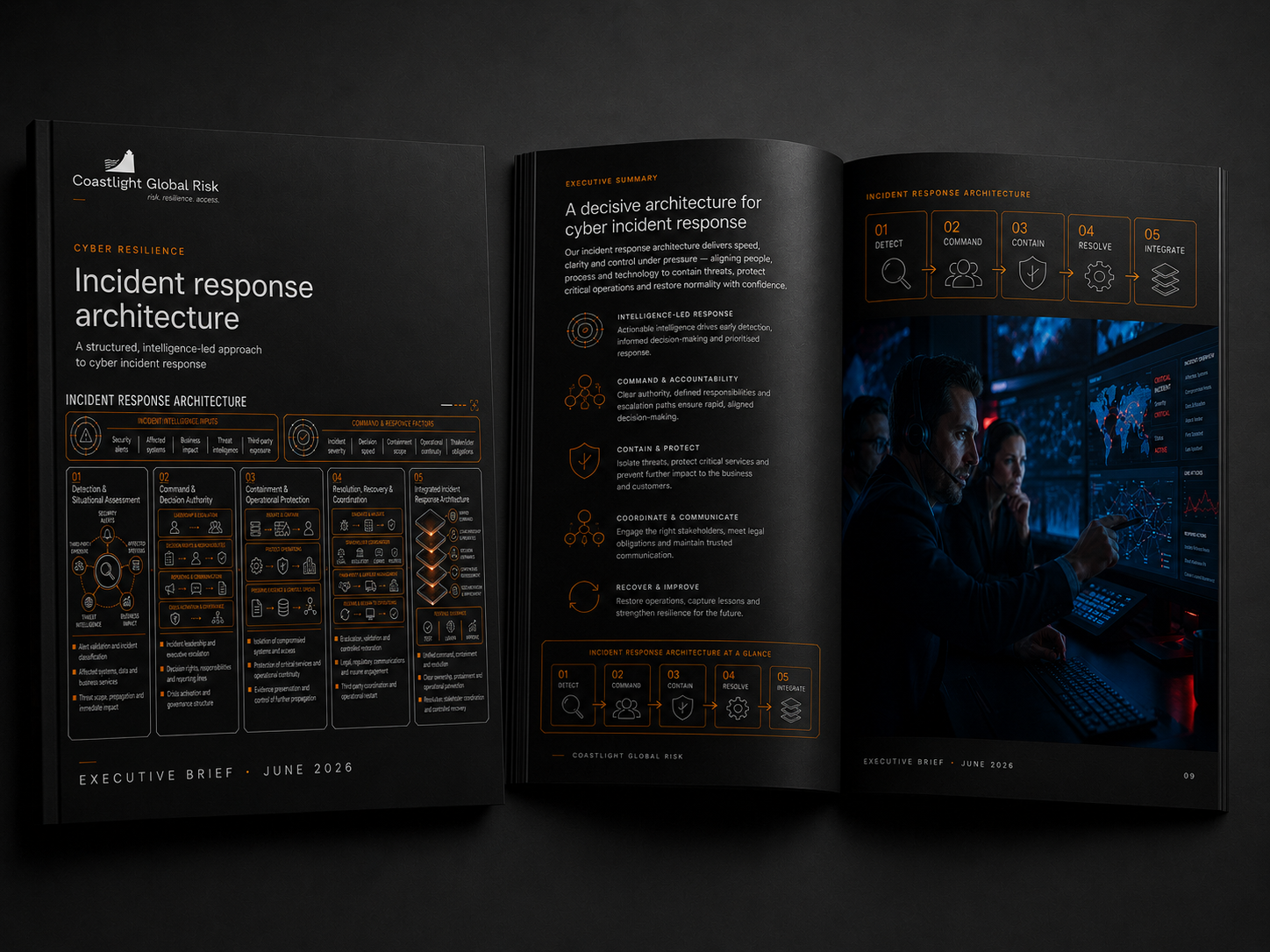
How situational awareness, command authority, containment, stakeholder coordination and recovery decisions are structured during a major cyber incident.
incident assessment, severity and business impact
command authority, containment and operational protection
resolution, stakeholder coordination and controlled recovery