
MACRO INTELLIGENCE
Macro resilience & risk retention

Growth trajectories, inflation cycles, credit conditions, sector demand and regional economic pressure: one integrated framework for understanding how macro conditions determine operating resilience, loss absorption and the organisation’s capacity to retain risk.
Corporate resilience depends partly on the economic environment in which revenue, margins and investment decisions are generated. Growth momentum, consumer demand, industrial activity, export conditions and sector-specific cycles influence sales visibility, capacity utilisation and the ability to absorb disruption. National indicators alone may conceal significant differences between regions, industries and customer groups. Effective macro analysis therefore connects broad economic direction with the local demand conditions that actually shape enterprise performance.
Growth & Demand Conditions
Inflation affects resilience through wages, energy, materials, logistics, financing and replacement costs. Even when headline inflation moderates, cost pressure may remain embedded within supplier contracts, labour markets or capital expenditure. Companies with limited pricing power, concentrated supply chains or long contractual commitments may experience persistent margin compression. Understanding inflation exposure requires analysis of where costs arise, how quickly they can be passed through and how prolonged pressure changes liquidity, profitability and loss-absorbing capacity.
Inflation, Costs & Margin Pressure
Credit conditions influence how much volatility an organisation can retain without weakening strategic flexibility. Wider spreads, tighter lending standards and reduced liquidity may increase financing costs precisely when operational disruption or investment needs intensify. At the same time, changing economic conditions affect expected losses, asset values and the price of external risk transfer. Effective analysis connects credit availability, cash generation, balance-sheet strength and insurance economics to determine how much risk can be retained responsibly and where external capacity becomes essential.
Credit & Risk-Retention Capacity
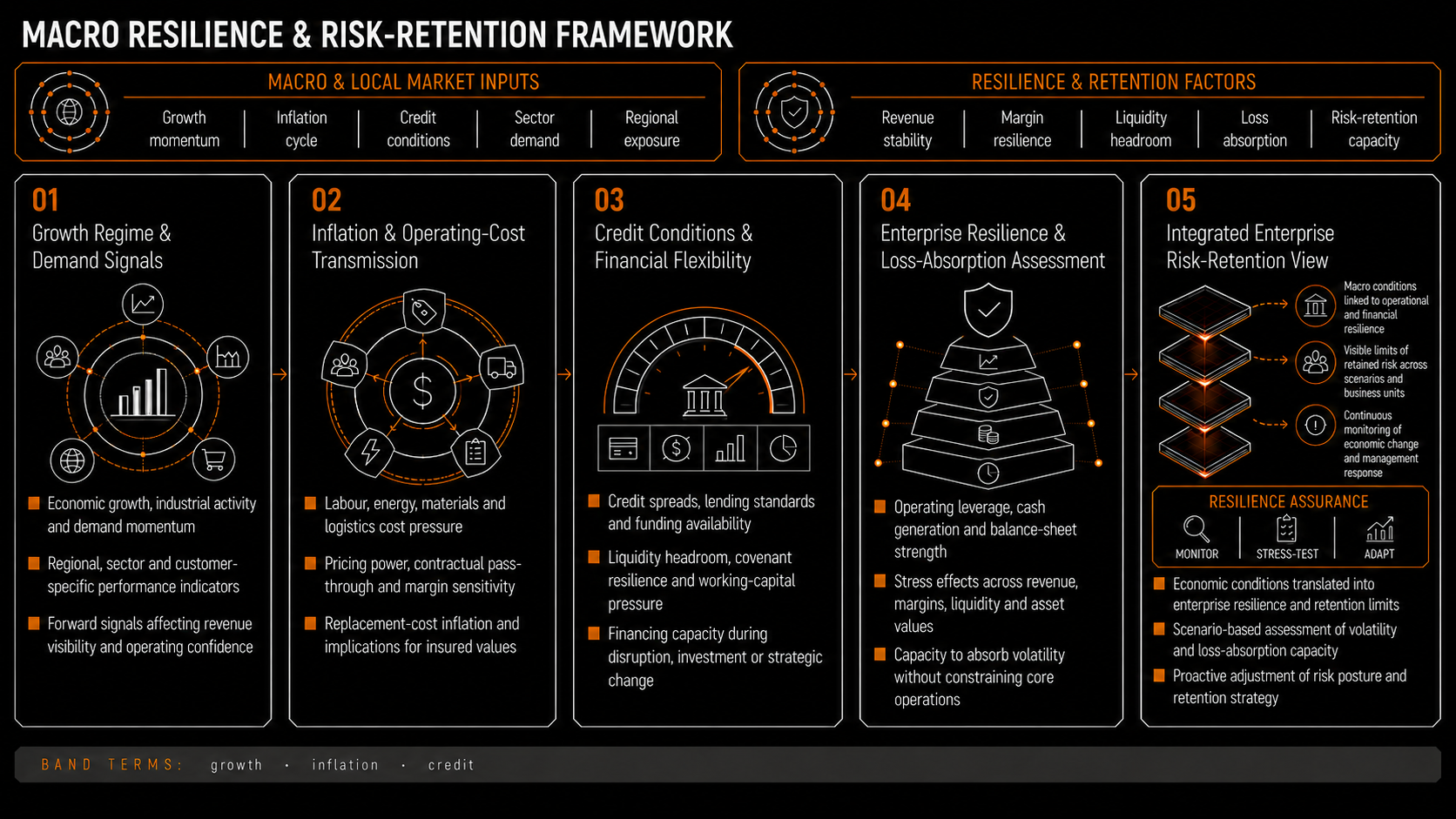
Macro conditions shape local resilience because enterprises do not experience growth, inflation or credit pressure as abstract economic indicators. These forces move through customer demand, input costs, labour markets, supplier stability, financing conditions and asset values, influencing the organisation’s ability to absorb disruption and retain loss. A business may appear resilient under stable conditions while becoming significantly more exposed when revenue slows, margins tighten and credit availability weakens simultaneously. Effective macro analysis therefore connects economic growth, inflation transmission, regional demand, credit conditions, operating leverage, liquidity and balance-sheet strength within one coherent resilience framework. This allows leadership to determine how much volatility the organisation can retain, where external risk transfer remains economically necessary and when changing macro conditions require a more defensive risk posture.
© 2026 Coastlight Global Risk
COASTLIGHT EXECUTIVE BRIEF
Macro resilience & risk retention
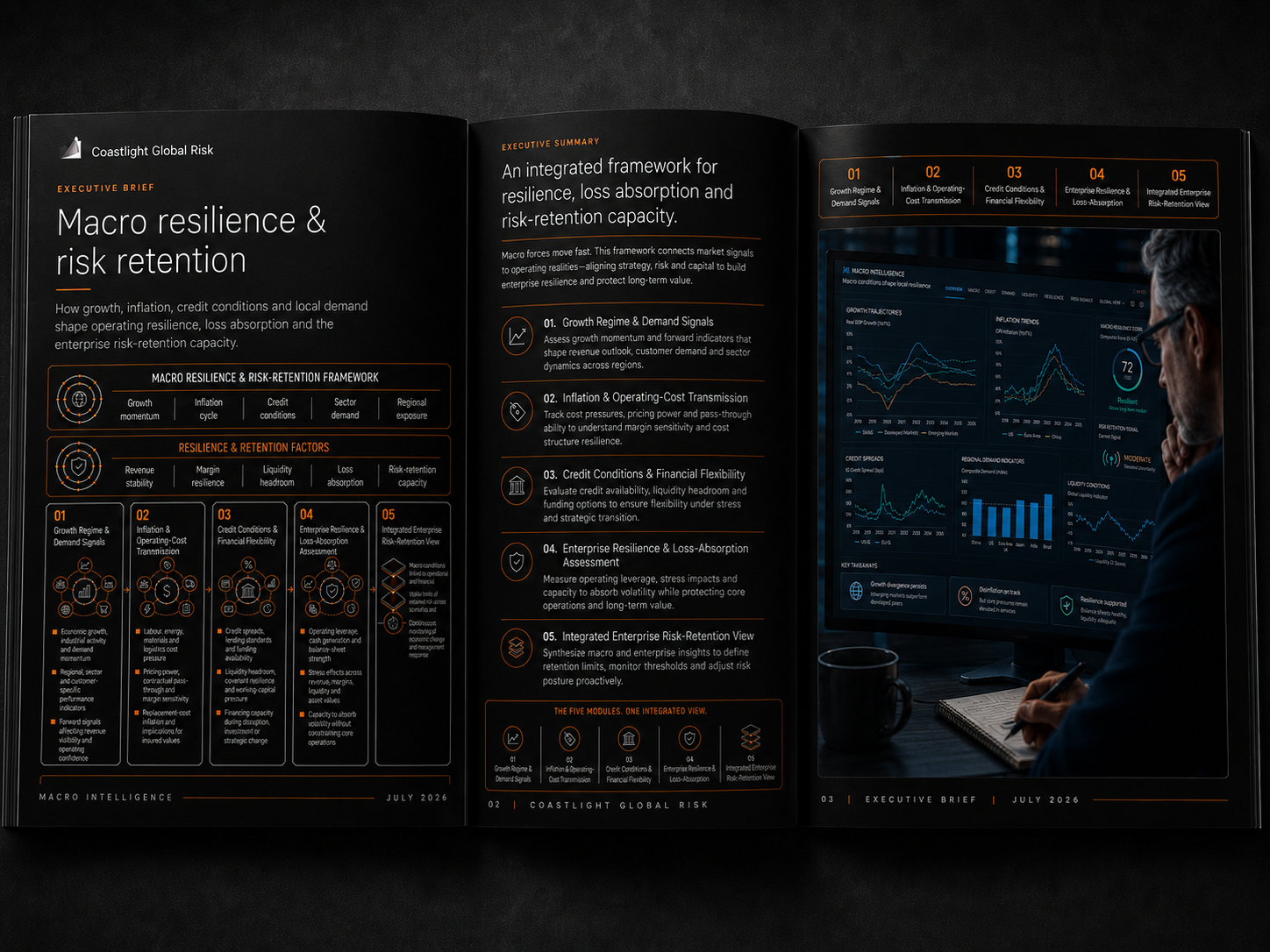
How growth, inflation, credit conditions and local demand influence operating resilience, loss absorption and the enterprise capacity to retain risk.
growth conditions, sector demand and regional exposure
inflation transmission, margin sensitivity and liquidity pressure
loss absorption, financial resilience and risk-retention capacity