
CYBER RESILIENCE
Readiness
architecture

Critical priorities, response protocols, triage logic, decision authority and operational playbooks: one integrated architecture for ensuring that the organisation knows what to protect, who must act and how the response should unfold before an incident begins.
Cyber readiness begins before any alert is triggered. Leadership must know which services, operations, assets, data and customer commitments require immediate protection and which consequences would be unacceptable. Priority clarity establishes the organisation’s critical functions, disruption tolerances, escalation thresholds and restoration objectives so that limited time and resources can be directed towards what matters most.
Priority Clarity
Protocol & Triage
During a major incident, incomplete information and competing demands can delay action. Effective protocols define how alerts are validated, incidents are classified, severity is assessed and responsibility is escalated. Triage logic separates routine technical events from disruptions requiring crisis governance, operational intervention, regulatory engagement, insurer notification or executive decision-making.
A playbook must translate policy into coordinated action. Technical teams, operations, leadership, legal, communications, human resources, suppliers and insurers must understand their roles, decision rights, dependencies and required outputs. Effective readiness ensures that playbooks are usable under pressure, supported by current contact structures, tested through realistic exercises and adaptable as the situation develops.
Playbook Execution
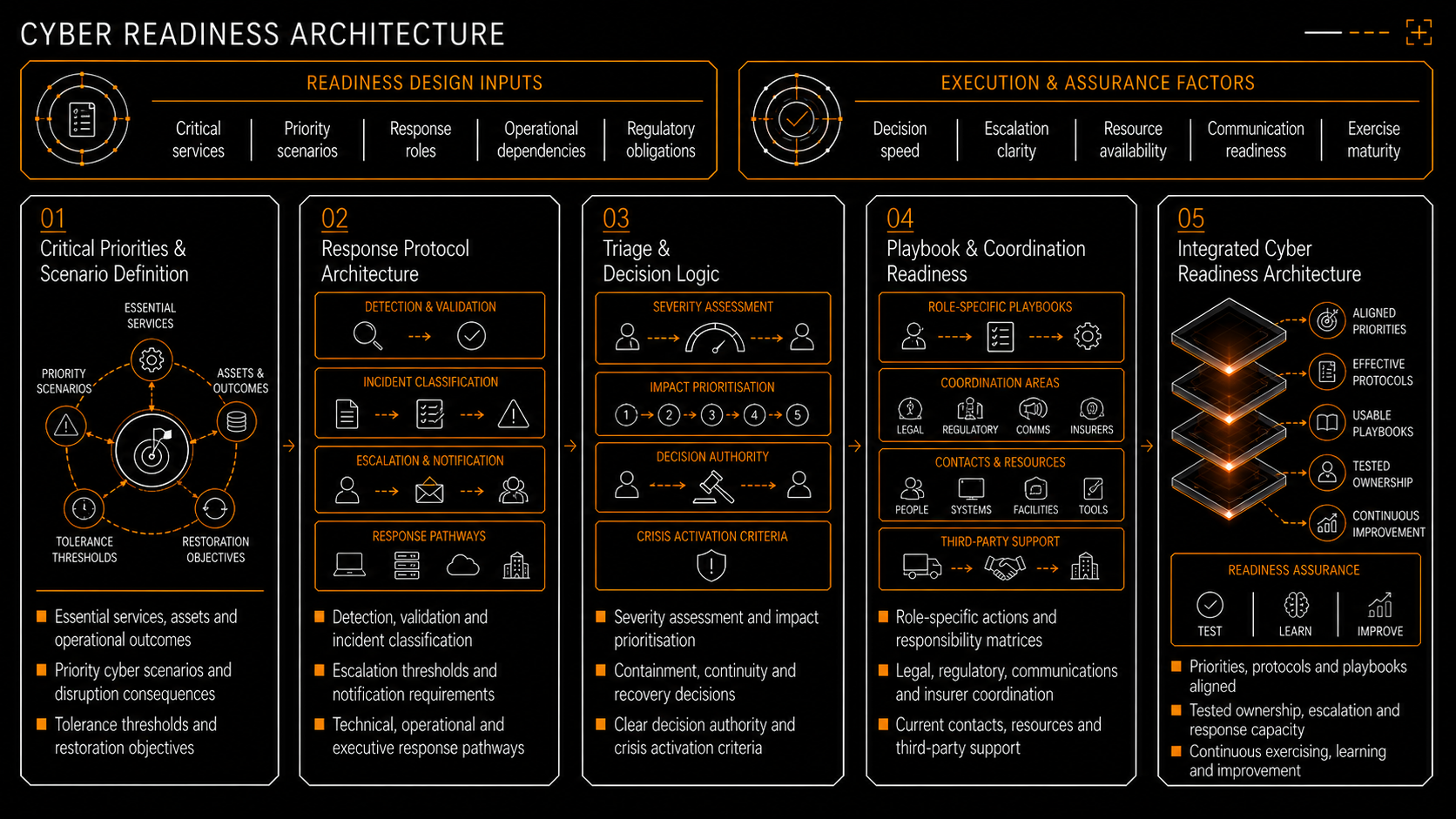
Cyber readiness depends on decisions made before an incident places the organisation under pressure. Critical services must already be prioritised, disruption tolerances understood, response roles assigned and escalation thresholds agreed. Without this preparation, technical teams may act without operational context, leadership may receive incomplete information and valuable time may be lost deciding who owns the response. Effective readiness architecture therefore connects business priorities, scenario assumptions, response protocols, triage logic, decision authority, communication pathways, external support and tested playbooks within one coherent structure. The objective is to ensure that when an incident begins, the organisation does not have to invent its response, but can activate a prepared, coordinated and adaptable system of action.
© 2026 Coastlight Global Risk
Readiness architecture
COASTLIGHT EXECUTIVE BRIEF
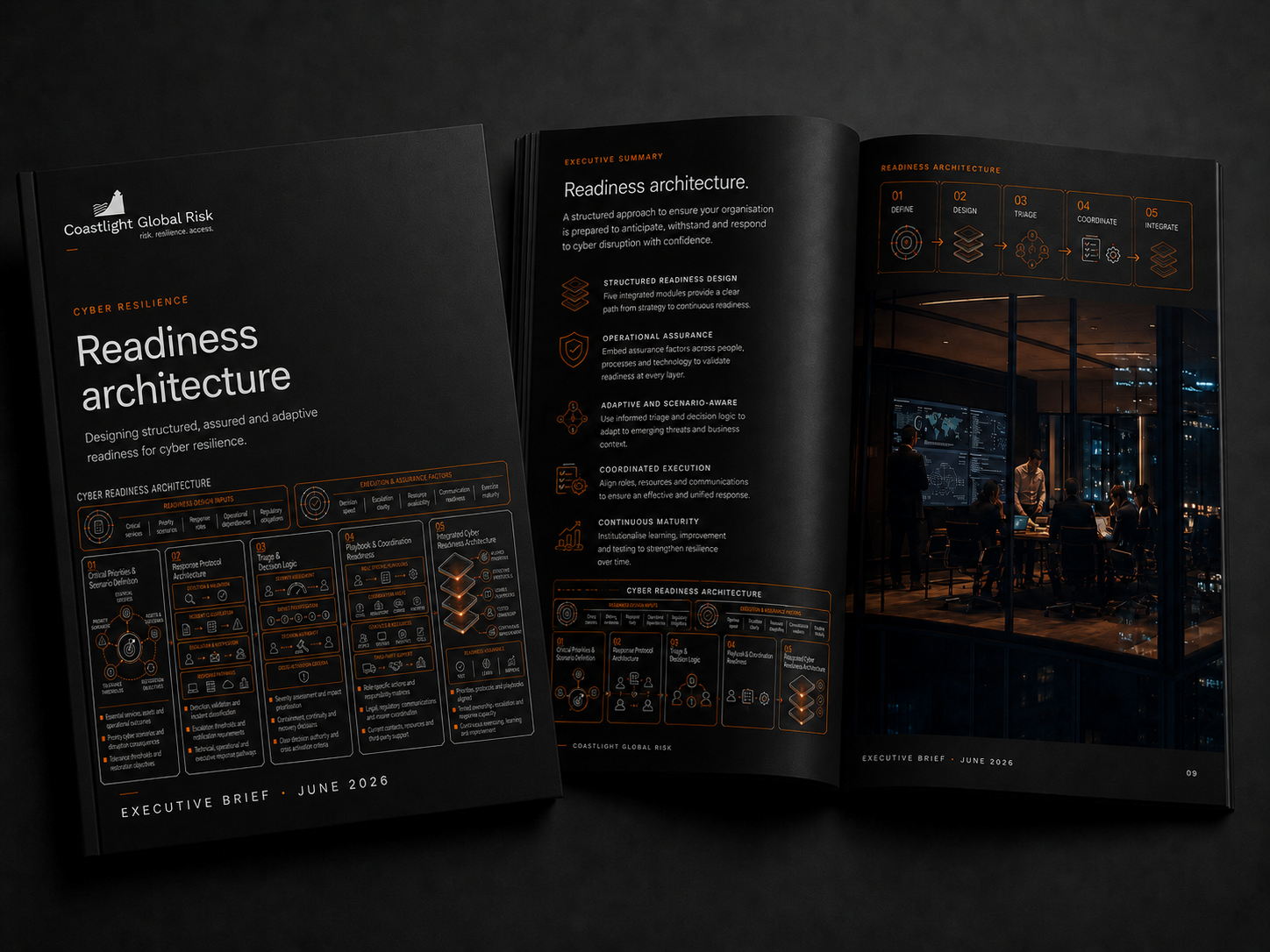
How critical priorities, response protocols, triage logic, decision authority and operational playbooks are aligned before a major cyber incident occurs.
critical priorities, scenarios and escalation thresholds
response protocols, triage logic and decision authority
playbooks, coordination, exercising and continuous improvement