
EXECUTIVE RISK ADVISORY
Risk identification
architecture
Operations, assets, contracts, claims history, supply chains and strategic dependencies: one integrated architecture that reveals where enterprise risk truly accumulates — and translates those connections into a structured Risk to Code model.

Risk identification begins with a comprehensive view of the enterprise. Operations, physical and digital assets, contracts, customer relationships, claims history, insurance programmes, supply chains and critical infrastructure must be examined as parts of one connected operating system. The objective is to reveal exposures that remain invisible when business units, locations and risk categories are assessed in isolation — and to bring them into one connected risk model.
Exposure Visibility
Enterprise risk rarely remains confined to its point of origin. A supplier failure, equipment breakdown, contractual dispute, cyber incident or infrastructure outage can propagate across production, revenue, customer delivery, liquidity and reputation. Mapping these transmission pathways is where Risk to Code begins: dependencies become visible, traceable and decision-ready.
Interdependence
Not every identified exposure requires the same level of attention. Effective risk identification evaluates probability, severity, velocity, control effectiveness, financial impact and recoverability in order to distinguish manageable operational issues from risks capable of affecting strategic objectives or the balance sheet. The result is a prioritised view of where management action, mitigation, risk transfer or additional analysis is required.
Executive Prioritisation
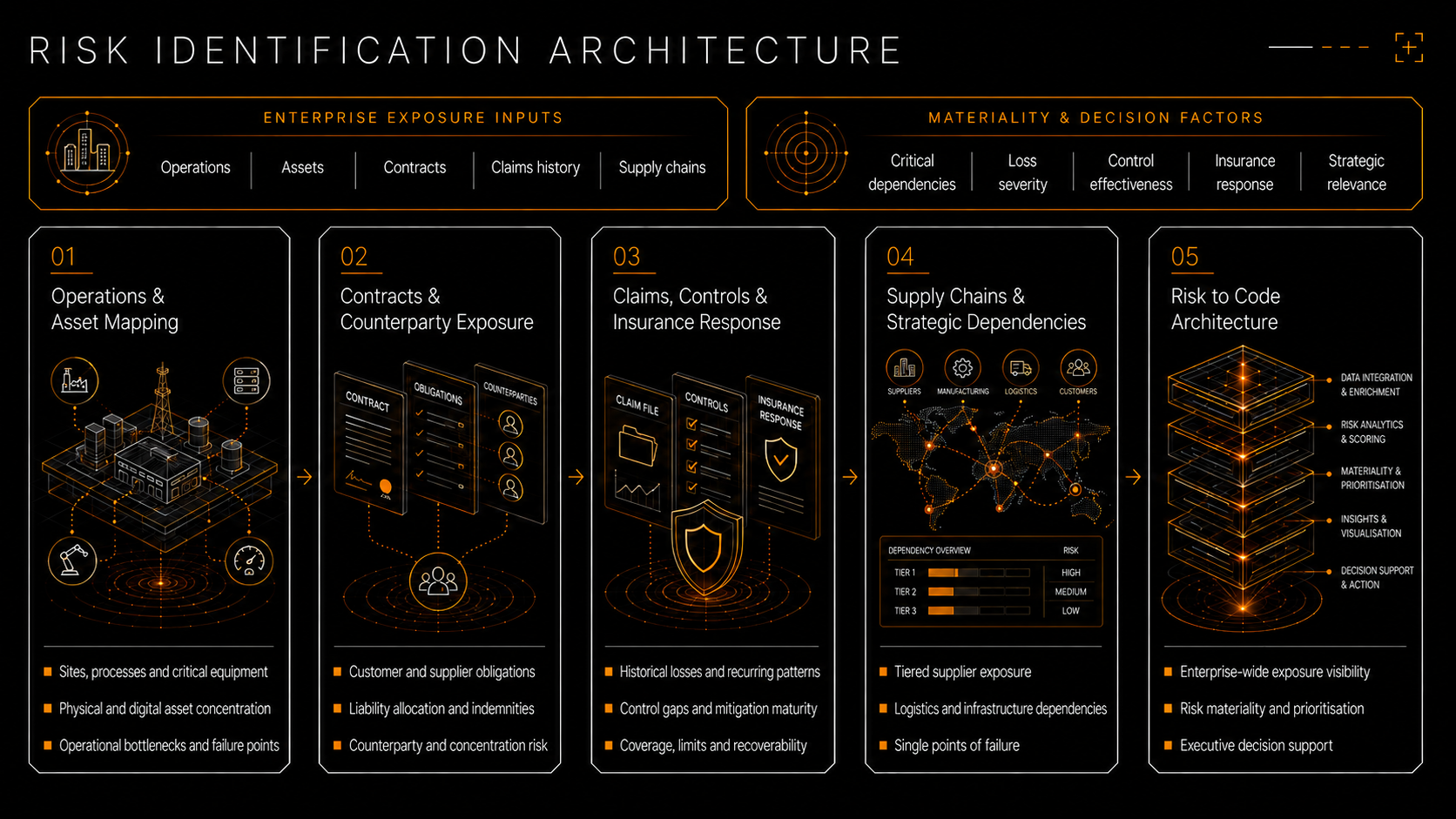
Enterprise risk develops across operations, assets, contracts, counterparties, historical losses, supply chains, infrastructure and strategic dependencies. An exposure that appears limited within one business unit may support several critical processes, affect multiple stakeholders and trigger financial, operational and insurance consequences across the organisation. Effective risk identification therefore depends on connecting fragmented information into one coherent enterprise view in which concentration, interdependence, loss potential, control effectiveness and recoverability can be assessed together and translated into clear executive priorities — a structured Risk to Code view of the enterprise.
© 2026 Coastlight Global Risk
COASTLIGHT EXECUTIVE BRIEF
Risk identification architecture
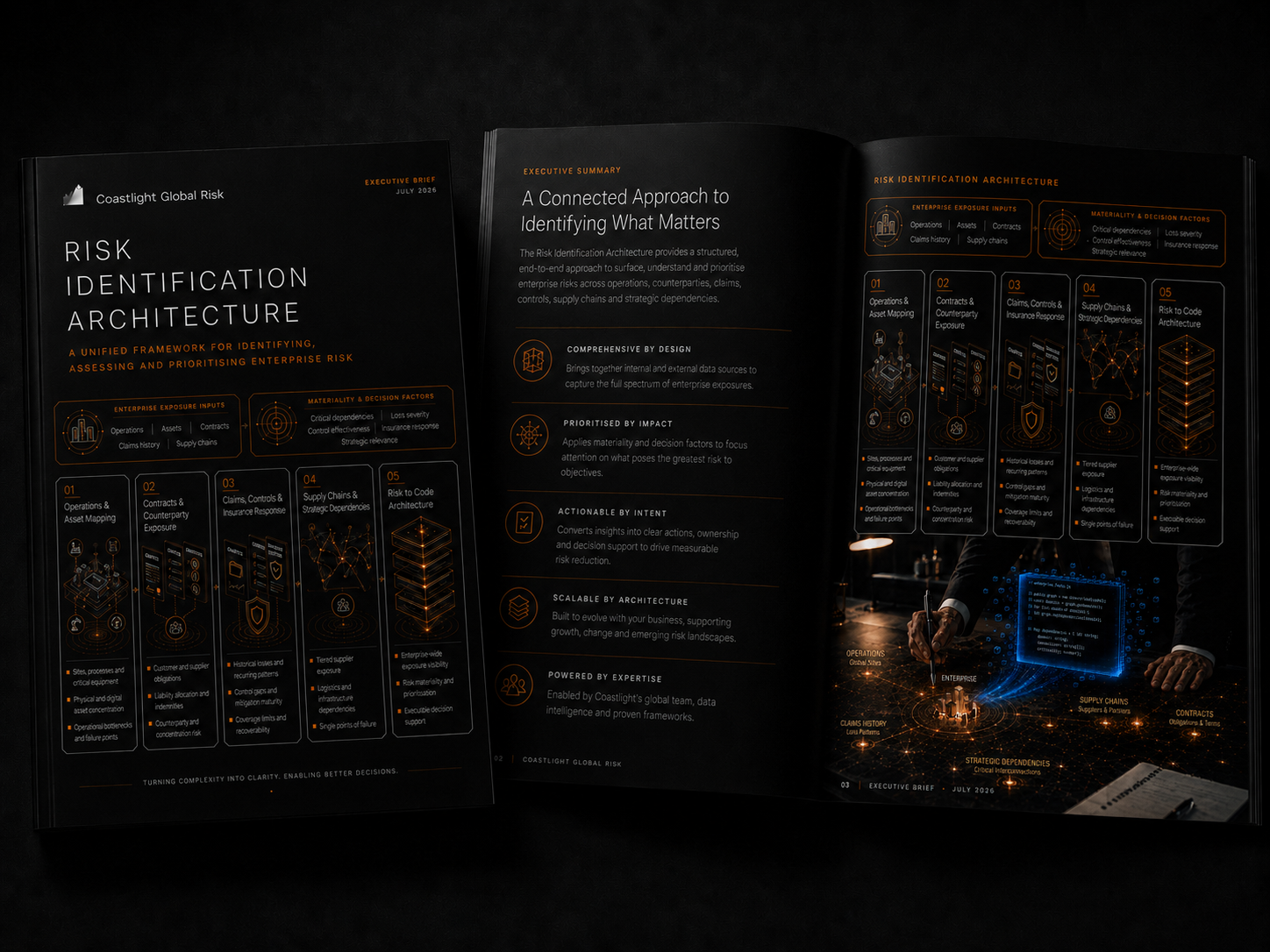
How operations, assets, contracts, claims history, supply chains and strategic dependencies are connected and translated into a decision-ready enterprise risk model.
enterprise exposure and asset mapping
interdependencies, concentrations and loss pathways
risk materiality, prioritisation and executive action