
Risk-market dynamics & renewal readiness
MACRO INTELLIGENCE
Syndicate capacity, insurer appetite, loss experience, reinsurance costs, premium pricing, policy exclusions and changing underwriting requirements: one integrated framework for understanding how the risk market moves before renewal and reshapes enterprise coverage, cost and negotiating leverage.

Insurance capacity is continuously reallocated across industries, territories and risk classes. Insurer capital, reinsurance availability, catastrophe losses, investment returns, regulatory requirements and changing risk appetite influence which exposures underwriters are prepared to accept and on what terms. A programme that was readily supported during the previous renewal may therefore encounter reduced limits, narrower participation or greater underwriting scrutiny before the formal renewal process begins. Effective market intelligence identifies these changes early enough for the organisation to preserve options rather than react after capacity has already tightened.
Capacity & Market Conditions
Pricing, Claims & Underwriting Pressure
Premium movement is rarely determined by the organisation’s own loss history alone. Portfolio-level claims trends, emerging liability theories, cyber-loss development, climate exposure, repair-cost inflation and insurer profitability all affect underwriting decisions. Market repricing may be accompanied by higher deductibles, new exclusions, reduced sublimits, more restrictive wording or additional information requirements. Understanding these dynamics requires connecting external market signals with the organisation’s specific claims experience, control environment and risk profile to determine where pressure is systemic and where it can be challenged.
Renewal Position & Negotiating Leverage
Renewal outcomes are shaped well before quotations are formally requested. Data quality, claims narratives, exposure modelling, programme design, insurer relationships and the timing of market engagement influence how underwriters perceive the risk and how much competition can be created. Organisations that wait until the renewal date approaches may be forced to negotiate within a market position that has already deteriorated. Effective renewal preparation builds a credible enterprise risk narrative, identifies alternative capacity and establishes strategic priorities before insurers define the available terms.
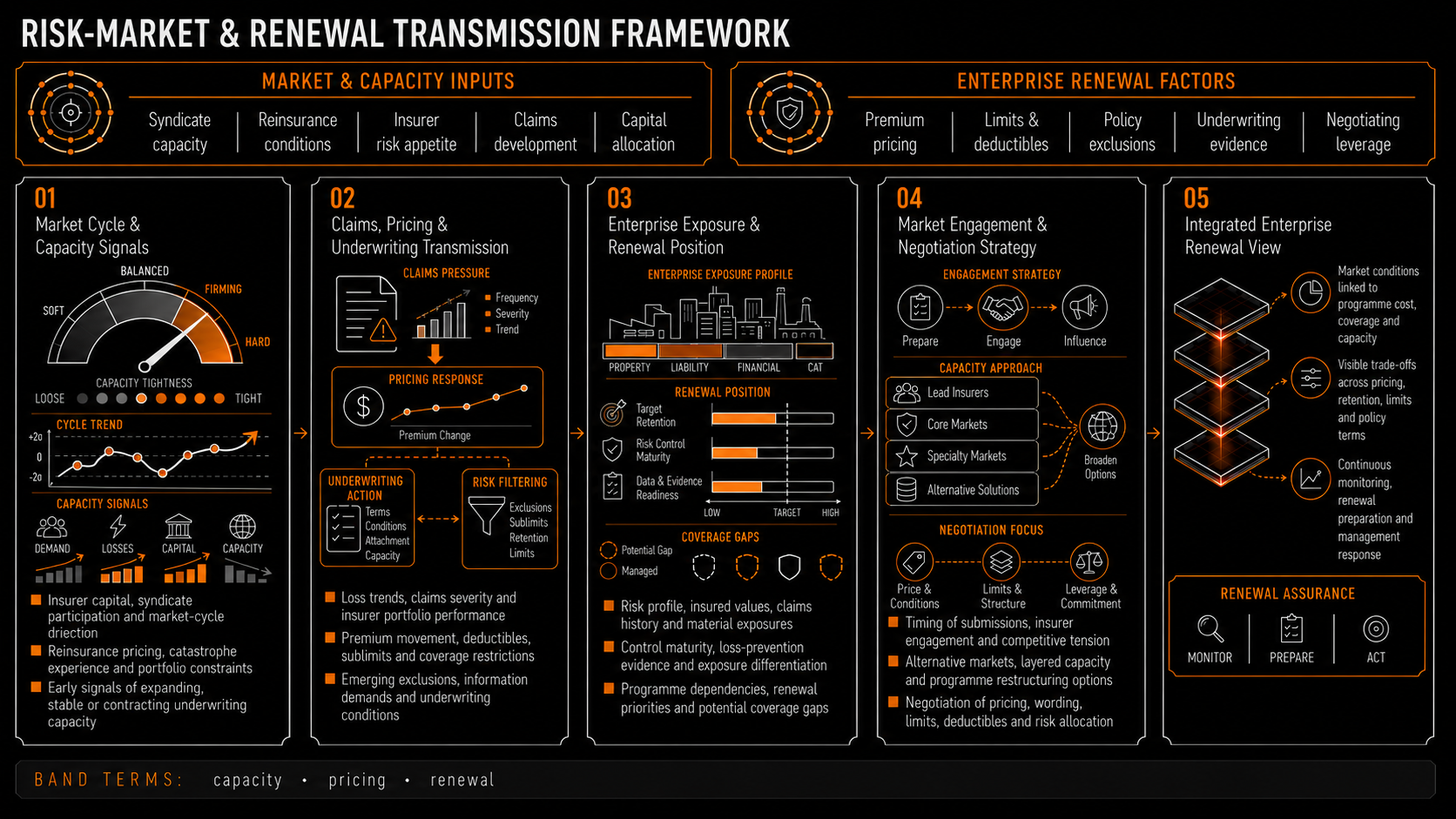
The risk market moves before the renewal date because insurers, reinsurers and capital providers continuously reassess loss experience, portfolio concentration, emerging exposures and expected returns. Capacity may be redirected, pricing models recalibrated and policy terms tightened months before an organisation receives its first renewal indication. A programme may therefore become more expensive or restrictive not only because its own risk has changed, but because cyber losses, climate events, liability trends, reinsurance costs or insurer capital constraints have altered the wider underwriting environment. Effective macro intelligence connects market-cycle signals, capacity movements, claims development, insurer appetite, enterprise exposure, programme design and negotiation timing within one coherent renewal framework. This enables leadership to anticipate market pressure, strengthen the organisation’s underwriting position and engage capacity providers before deteriorating conditions reduce available options.
© 2026 Coastlight Global Risk
Risk-market dynamics & renewal readiness
COASTLIGHT EXECUTIVE BRIEF
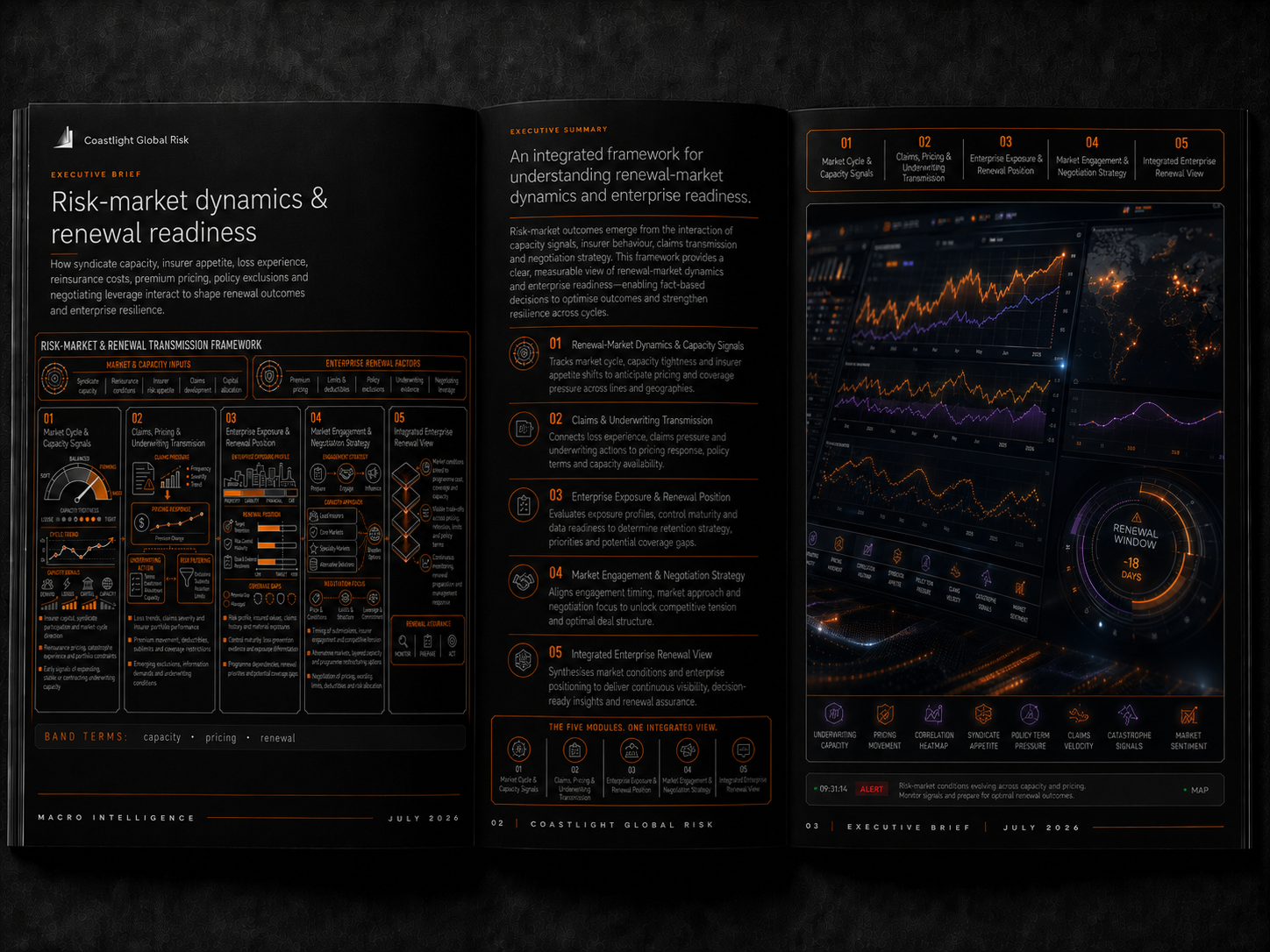
How syndicate capacity, insurer appetite, claims development and underwriting conditions reshape premium pricing, policy terms and enterprise negotiating leverage before renewal.
market capacity, reinsurance conditions and insurer risk appetite
claims development, pricing pressure and underwriting restrictions
renewal positioning, market engagement and negotiation strategy