
EXECUTIVE RISK ADVISORY
Risk prioritisation
architecture
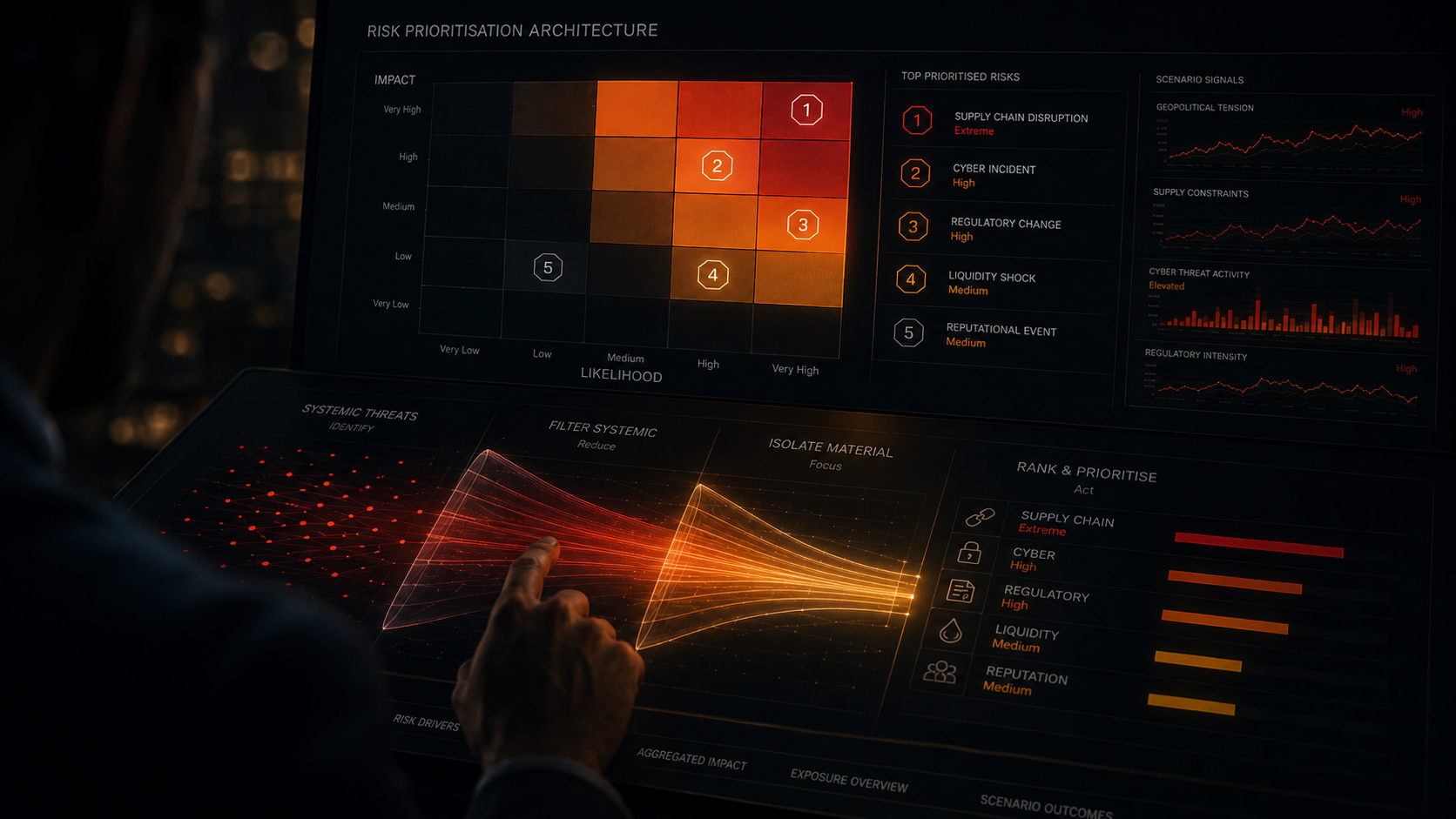
Systemic threats, operational vulnerabilities, supply-chain dependencies, transmission pathways, enterprise materiality and response capacity: one integrated architecture for isolating the exposures most capable of affecting resilience and strategic performance.
Risk prioritisation begins by distinguishing the external forces shaping the enterprise risk environment. Macroeconomic volatility, industrial demand shifts, supplier distress, energy and infrastructure constraints, cyber escalation, regulatory change, geopolitical instability and technological disruption do not affect every organisation in the same way. The objective is to identify which systemic threats intersect with the enterprise’s specific operating model, production network, asset base, customer and supplier relationships, financial structure and strategic dependencies.
Systemic Threat Context
Systemic threats become material only through specific channels of transmission. A supplier failure, equipment breakdown, energy outage or logistics disruption may interrupt production, delay customer delivery and place pressure on revenue and liquidity. A cyber incident may halt operations, expose contractual liabilities and trigger regulatory scrutiny, while a market or geopolitical shock may affect input costs, demand, counterparties and financing conditions simultaneously. Isolating these pathways reveals where broad uncertainty becomes a concrete enterprise exposure.
Exposure Isolation
Executive Prioritisation
Priority depends not only on probability and potential loss, but also on velocity, concentration, operational criticality, control effectiveness, recovery time, financial impact, insurance response and strategic timing. Effective risk prioritisation distinguishes monitored background risks from exposures requiring mitigation, contingency planning, operational redundancy, insurance restructuring, capital protection or immediate executive action.
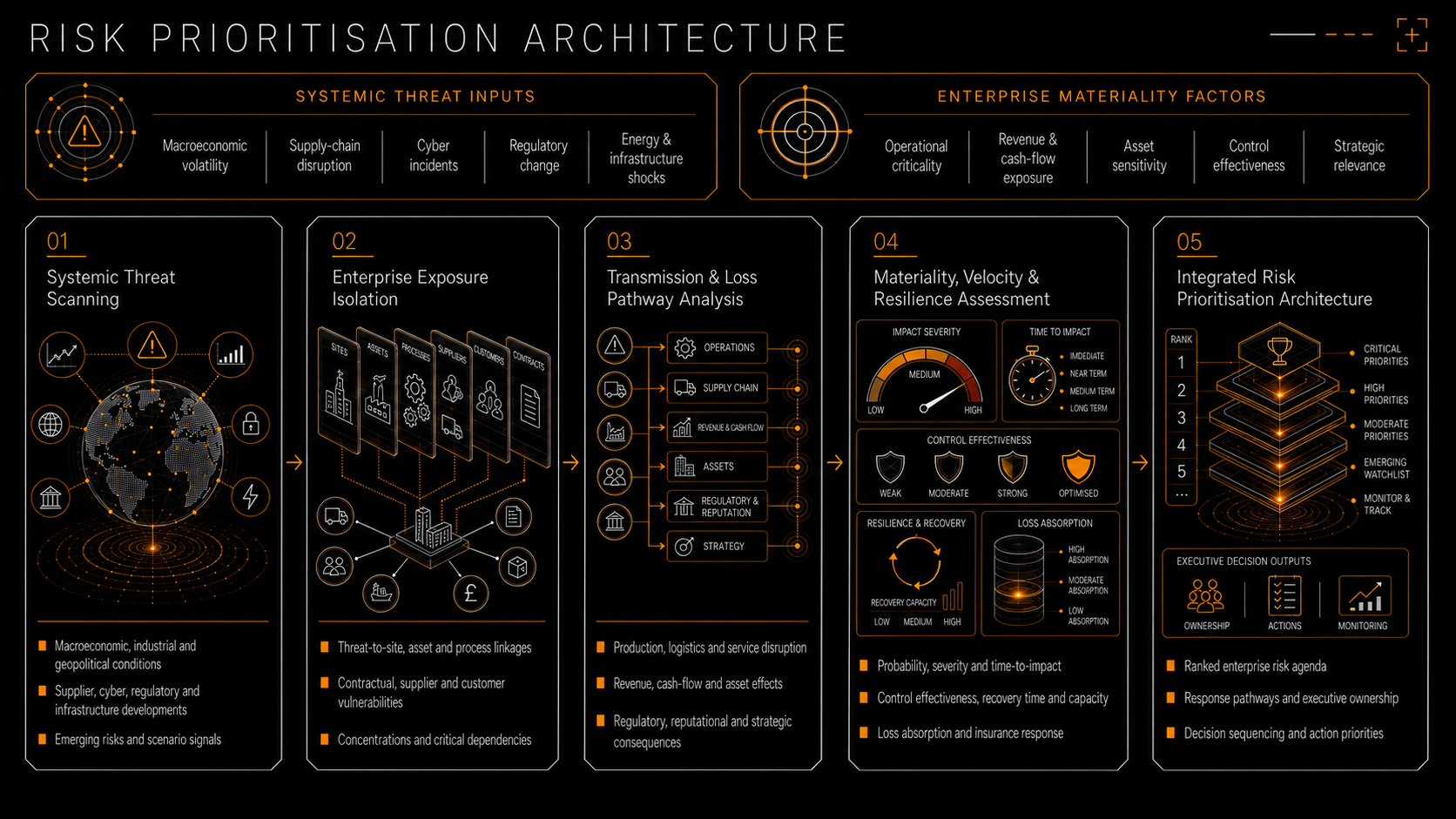
Enterprise risk prioritisation is not a generic ranking exercise based only on likelihood and impact. Systemic and operational threats become decision-relevant when they are connected to the organisation’s own sites, production processes, assets, suppliers, customers, contracts, infrastructure and strategic dependencies. A single disruption may interrupt several critical operations, propagate through supply and logistics networks, delay customer delivery and create simultaneous revenue, liquidity, liability and insurance consequences. Effective prioritisation therefore requires one integrated view of threat relevance, operational criticality, exposure concentration, loss velocity, control effectiveness, recovery capacity, financial tolerance and insurance response so that management can distinguish what should be monitored, mitigated, transferred, prepared for or acted on immediately.
© 2026 Coastlight Global Risk
COASTLIGHT EXECUTIVE BRIEF
Risk prioritisation architecture
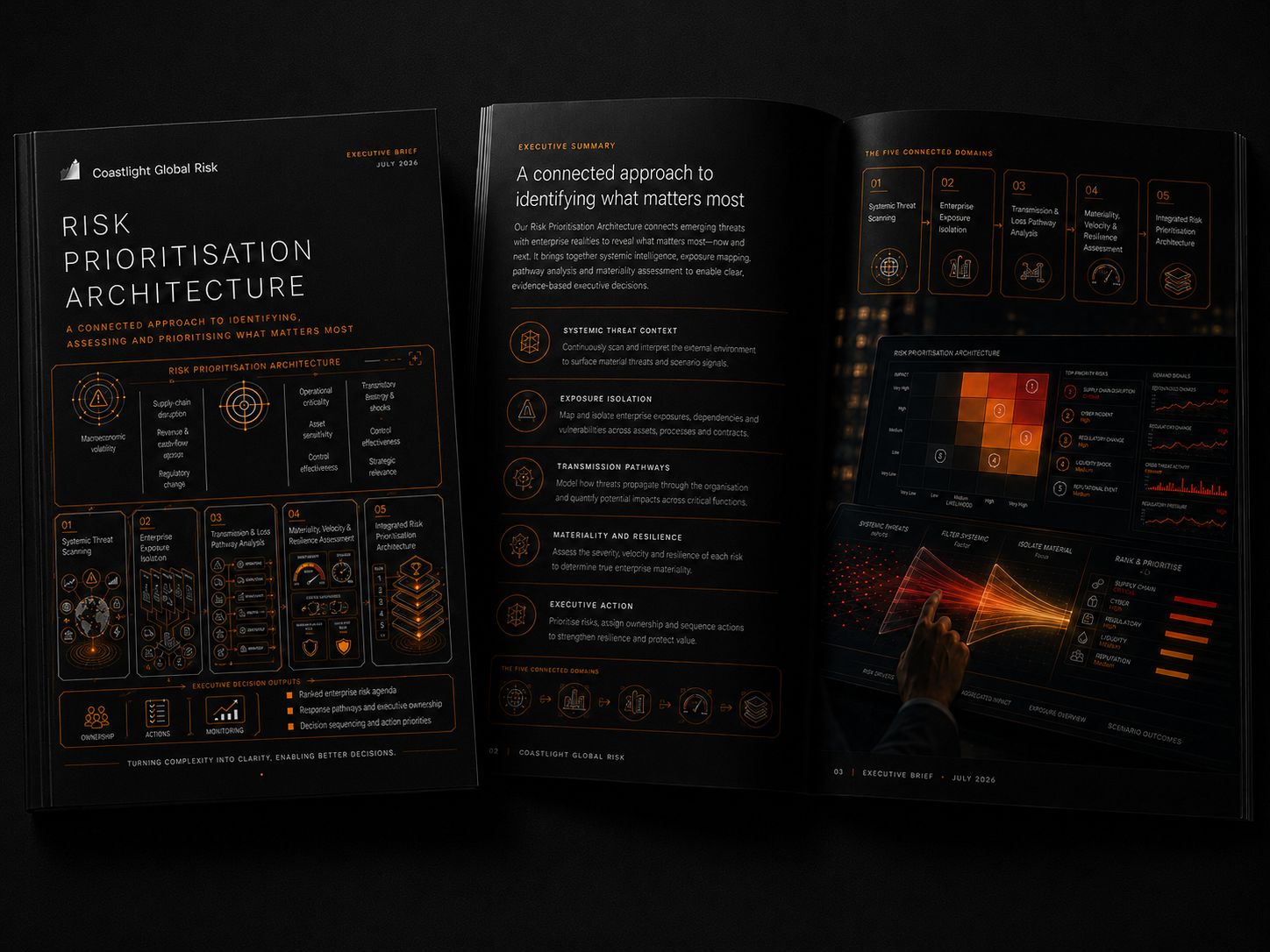
How systemic, industrial and operational threats are filtered through enterprise vulnerabilities, critical dependencies and materiality factors to identify the exposures requiring executive action.
systemic and industrial threat scanning
operational dependencies, and transmission pathways
risk ranking, response sequencing and executive action