
DAX-40 ACCESS
Risk transfer
architecture
Exposure mapping, scenario design, layered capacity, coverage alignment and governance: one coherent architecture for complex corporate risk.

Complex corporate risk cannot be understood policy by policy. Operational dependencies, asset concentrations, contractual obligations, cyber exposure, supply-chain vulnerabilities, financial tolerance and strategic priorities interact across the enterprise. A sound architecture begins by identifying how disruption can propagate, where losses may accumulate and which scenarios could place the greatest pressure on capital, continuity and management.
Risk Diagnosis
Programme Design
Effective programme design translates the risk landscape into a coherent structure of retentions, deductibles, primary cover, excess layers, specialist policies, limits and contractual protections. The objective is not simply to purchase more insurance, but to determine which risks should be retained, transferred, mitigated or financed — and how the individual components should operate together under severe loss conditions.
Governance & Execution
A resilient risk-transfer architecture aligns programme structure, policy wording, market allocation, claims protocols, decision rights and executive oversight. Clear governance ensures that the programme remains responsive to changing operations, acquisitions, emerging exposures and market conditions, while disciplined execution protects recoverability when a major event occurs.
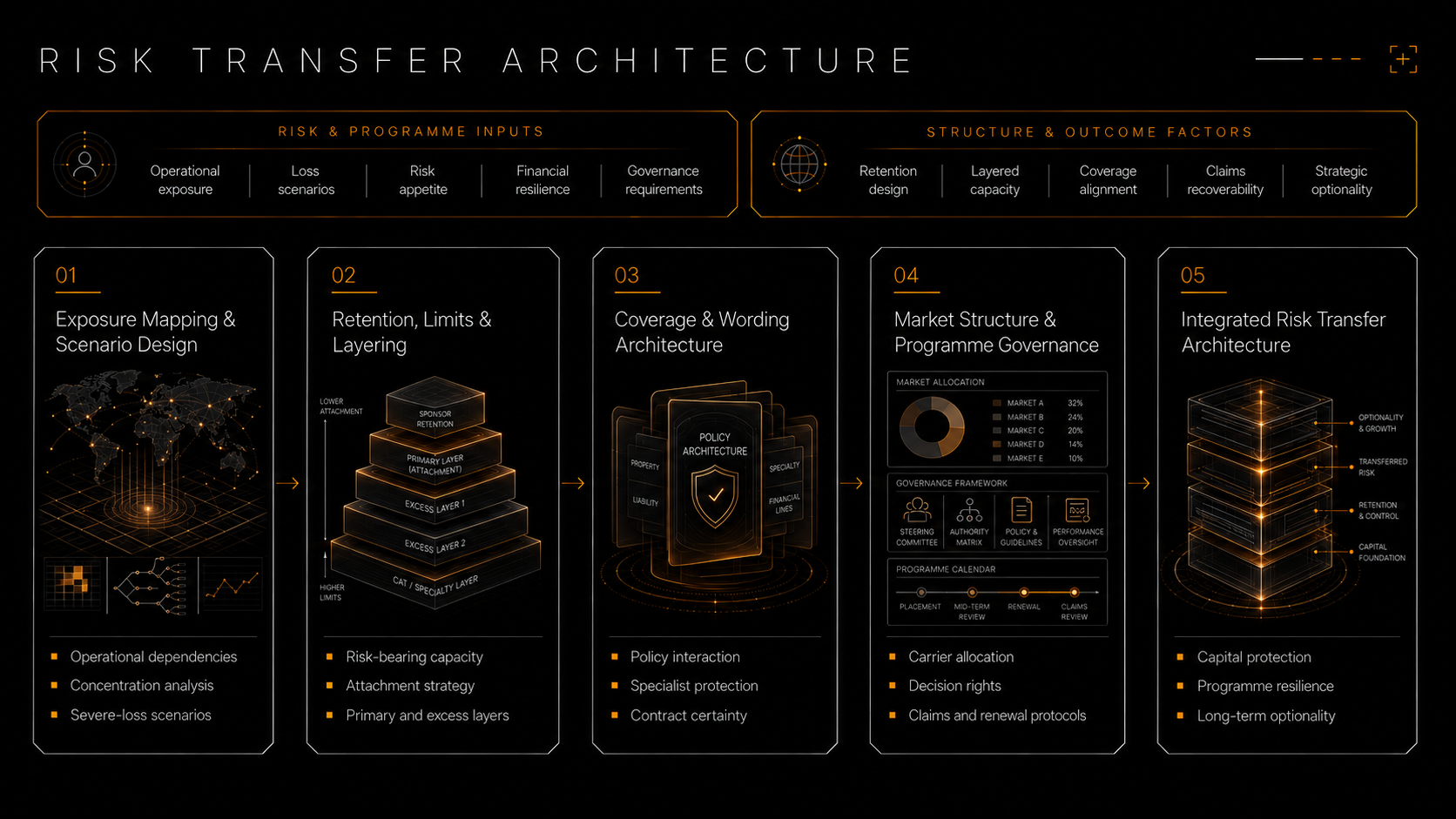
Complex risk architecture develops across exposure mapping, scenario analysis, retention strategy, layered capacity, coverage design, market structure and programme governance. A company may hold substantial insurance limits and still remain exposed if policies operate in isolation, critical interfaces are overlooked or loss scenarios are not reflected in the programme structure. Effective risk transfer therefore depends on translating operational reality into one coherent architecture in which retentions, limits, wordings, specialist covers and response mechanisms operate together to protect capital, continuity and strategic flexibility.
© 2026 Coastlight Global Risk
COASTLIGHT EXECUTIVE BRIEF
Risk transfer architecture
exposure mapping and severe-loss scenario design
retention, limits, layering and coverage architecture
market structure, governance and recoverability
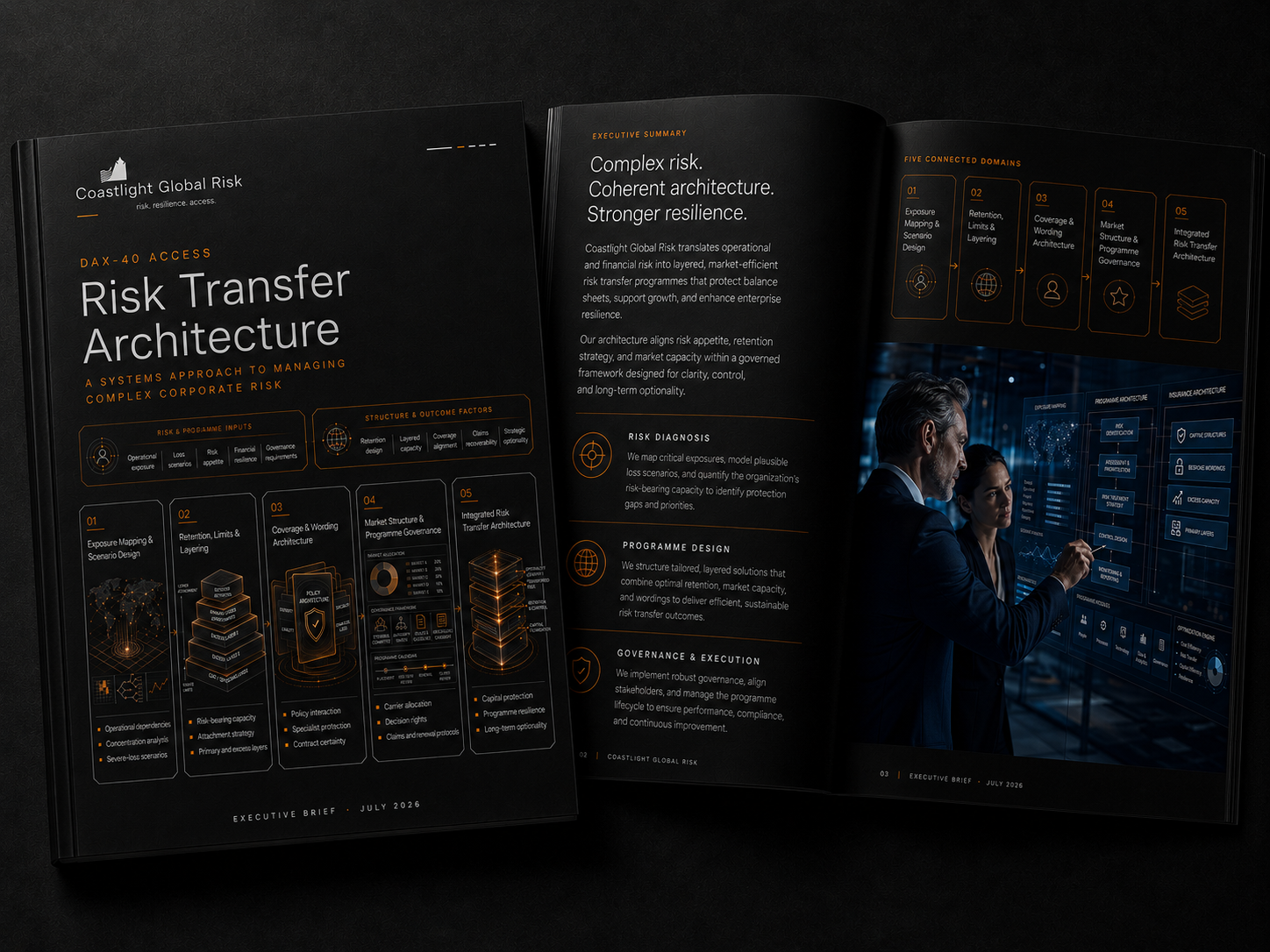
How exposure mapping, retention strategy, layered capacity, coverage architecture and programme governance combine to create resilient corporate risk-transfer outcomes.