
EXECUTIVE RISK ADVISORY
Underwriting
positioning

Forensic exposure analysis, claims intelligence, operational context, control improvements and programme structure: one integrated architecture for presenting the enterprise as a differentiated and well-understood risk to insurers and syndicates.
Insurers price uncertainty before they price individual risk parameters. Incomplete exposure data, unexplained claims, inconsistent asset values, unclear business-interruption dependencies and fragmented programme information increase perceived volatility and weaken underwriting confidence. Effective positioning begins by organising sites, assets, operations, supply chains, contracts, loss history and controls into one credible and verifiable evidence base.
Underwriting Evidence
An organisation should not be assessed solely against a generic industry profile. Its operating model, governance, resilience measures, claims response, risk improvements and management quality may distinguish it materially from comparable risks. Underwriting positioning translates these differences into a clear market narrative, demonstrating where exposures are controlled, where vulnerabilities remain and why the organisation represents a more attractive allocation of underwriting capacity.
Structural Integration
Strong positioning creates the conditions for more effective market engagement. Insurer appetite, syndicate strategy, capacity constraints, attachment preferences, policy wording and pricing expectations must be evaluated before negotiations begin. A disciplined approach sequences market access, creates appropriate competitive tension and aligns insurers with the layers, territories and risk categories they are best positioned to support.
Capacity & Negotiation
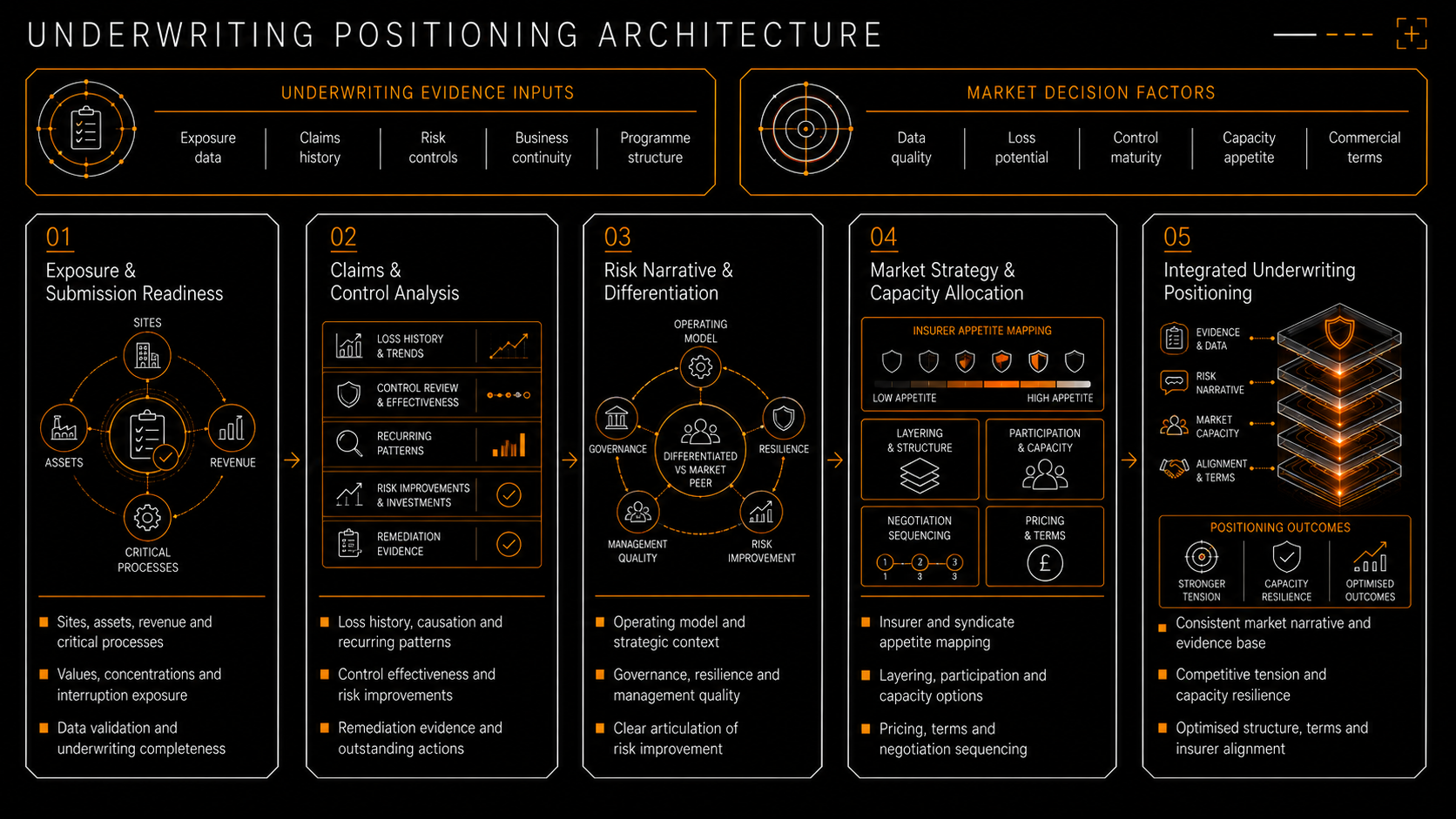
Underwriting outcomes are shaped long before formal pricing negotiations begin. Insurers and syndicates respond not only to the underlying exposure, but also to the quality of information, the credibility of claims explanations, the maturity of controls and the organisation’s ability to demonstrate measurable risk improvement. Fragmented data or an unclear market narrative may cause underwriters to apply conservative assumptions, restrict capacity or impose less favourable terms. Effective underwriting positioning therefore connects operational exposures, asset values, loss history, business-continuity dependencies, programme structure and management action within one coherent evidence base. This allows the market to distinguish the organisation from a generic industry risk, allocate capacity with greater confidence and evaluate pricing, structure and coverage terms on a more informed basis.
© 2026 Coastlight Global Risk
COASTLIGHT EXECUTIVE BRIEF
Underwriting positioning
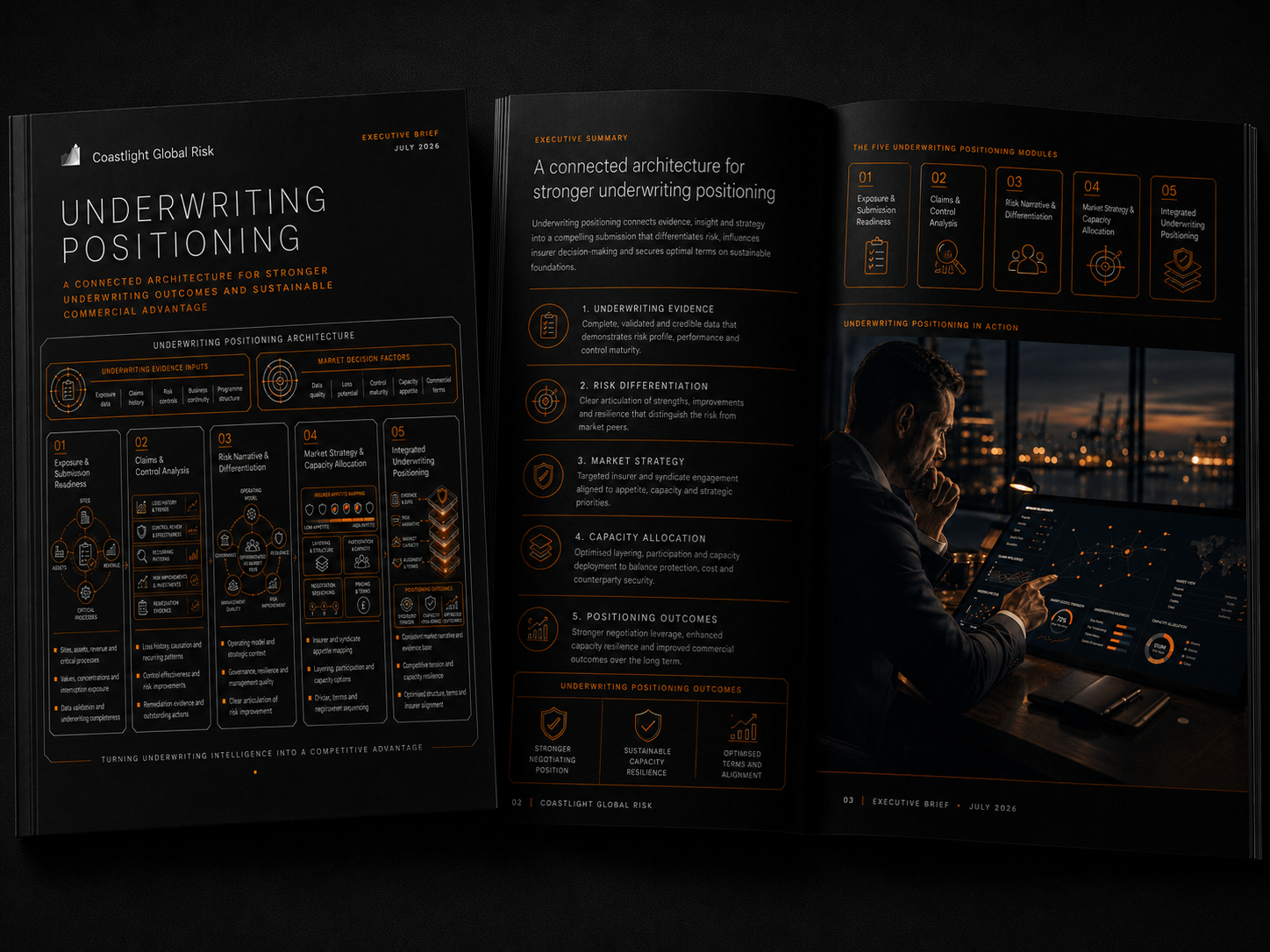
exposure data, claims intelligence and submission readiness
risk differentiation, control evidence and market narrative
capacity strategy, insurer engagement and negotiation sequencing
How exposure evidence, claims intelligence, control improvements and programme structure are organised to strengthen underwriting confidence and support effective capacity allocation.