
CYBER RESILIENCE
When systems
stop

Critical services, digital dependencies, operational disruption, containment, recovery priorities and business continuity: one integrated architecture for restoring the organisation when technology failure becomes an enterprise event.
Modern organisations depend on interconnected technology across production, logistics, communications, finance, customer delivery, safety systems and critical infrastructure. A ransomware attack, cloud outage, identity compromise, software failure or third-party disruption may therefore affect far more than the technology environment in which it originates. Effective cyber resilience begins by identifying which digital services support essential operations and how their failure would propagate across the enterprise.
Operational Dependency
Recovery Velocity
The decisive question is not simply whether systems can be restored, but how quickly critical business functions can return to an acceptable level of operation. Recovery priorities must reflect operational importance, dependency sequencing, data integrity, manual workarounds, available resources and the maximum period for which disruption can be tolerated. Technical recovery plans are insufficient unless they are aligned with the order in which the business itself must restart.
A severe cyber event creates simultaneous demands across technology, operations, leadership, legal, communications, customers, suppliers and insurers. Roles, escalation paths, decision rights and continuity measures must function under conditions of incomplete information and intense time pressure. Effective resilience connects containment, crisis governance, recovery execution and business continuity so that the organisation can maintain control while restoring essential services.
Continuity Under Pressure
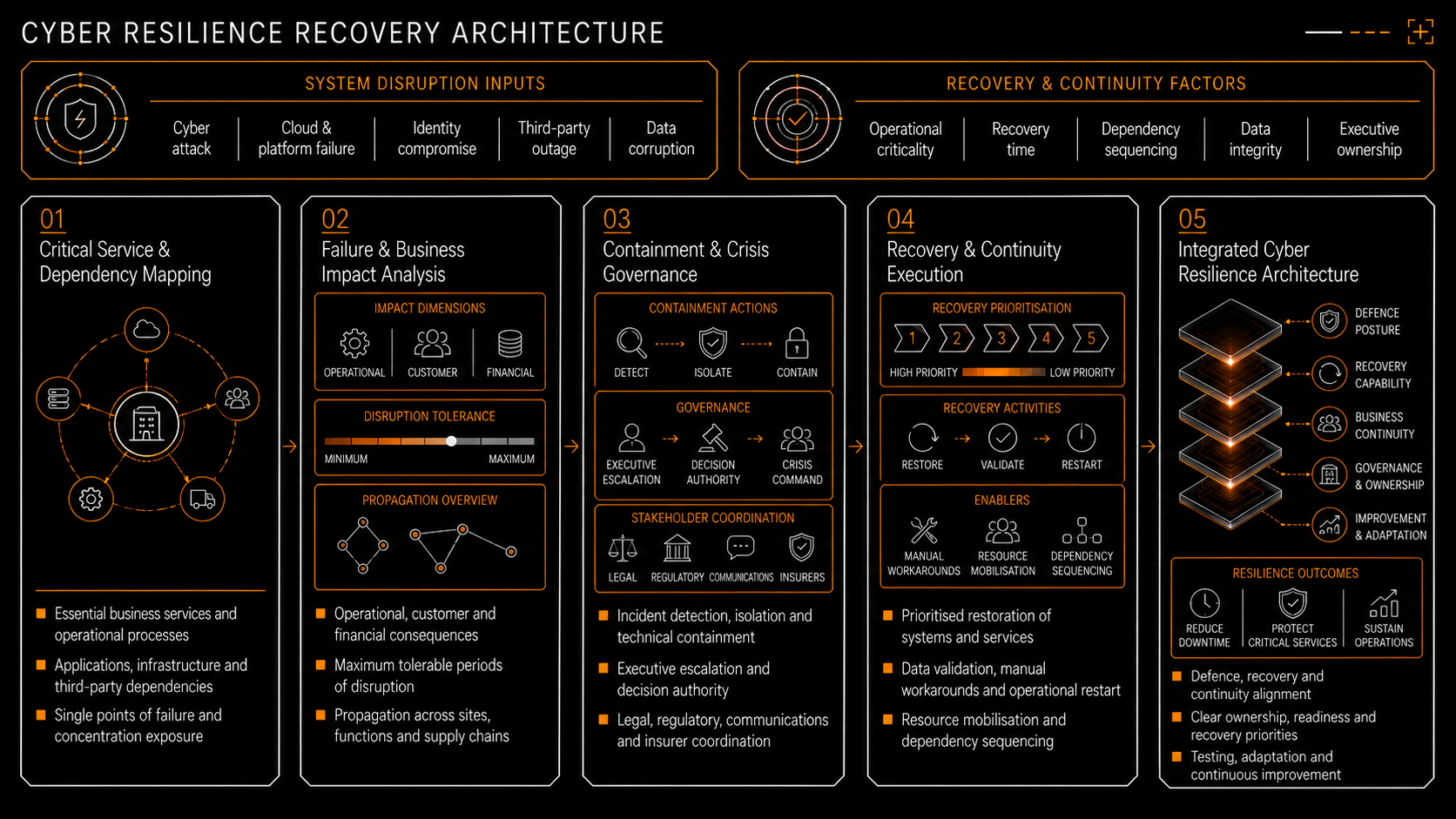
When systems stop, a technical incident becomes an enterprise continuity event. Production may be interrupted, customer services may become unavailable, suppliers may lose access to critical platforms and leadership may be required to make consequential decisions before the full extent of the disruption is known. Recovery therefore cannot be organised solely around individual applications or infrastructure components. Effective cyber resilience connects critical business services, digital dependencies, operational tolerances, containment measures, crisis governance, data integrity, recovery sequencing and continuity arrangements within one coherent structure. The objective is not merely to restore technology, but to regain operational control, protect essential services and return the organisation to a stable and sustainable level of performance.
© 2026 Coastlight Global Risk
COASTLIGHT EXECUTIVE BRIEF
When systems stop
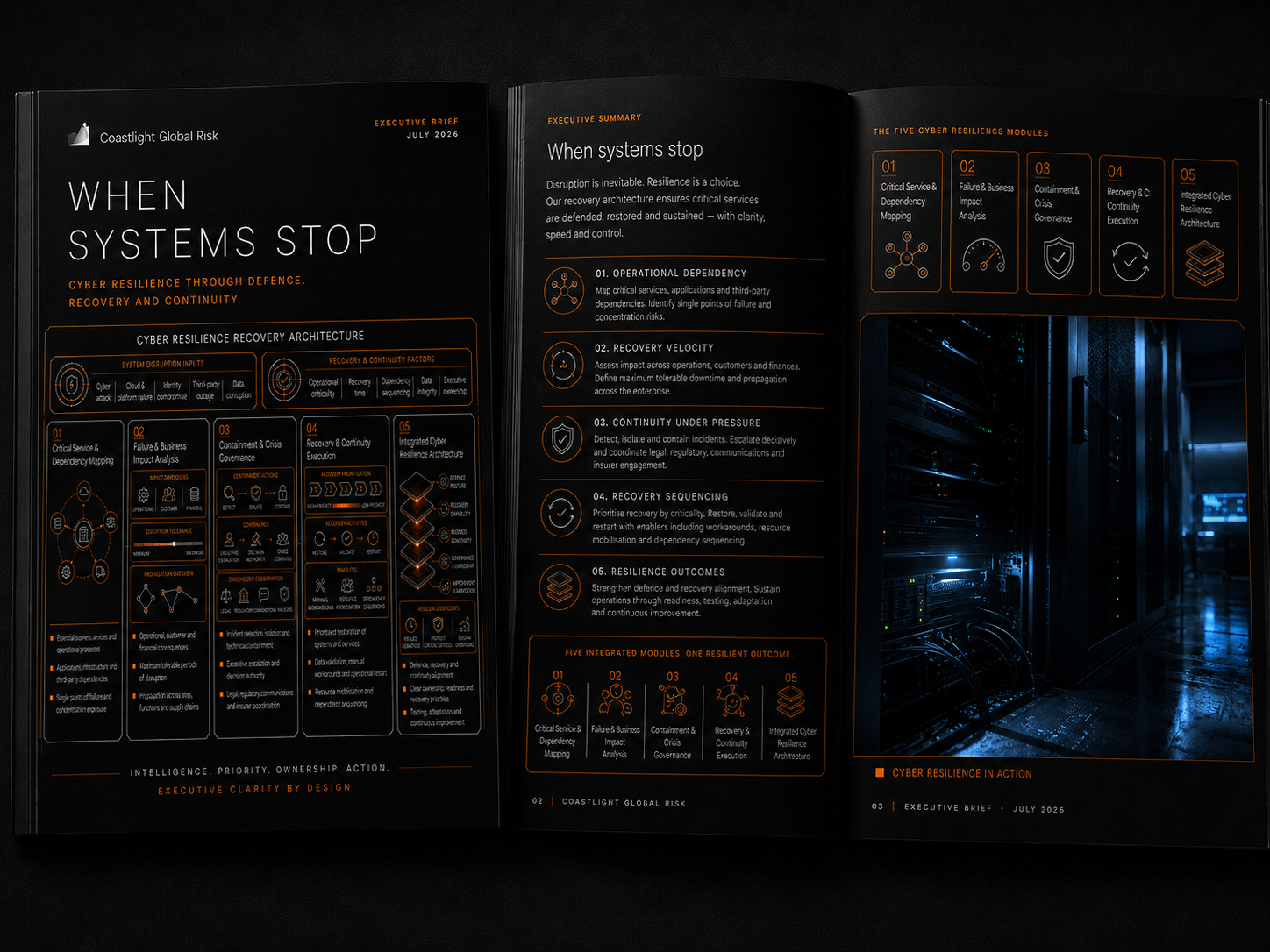
How critical services, digital dependencies, containment, recovery sequencing and business continuity are connected to restore operations after a major cyber disruption.
critical services, digital dependencies and failure propagation
containment, crisis governance and recovery sequencing
defence, recovery and business continuity integration